NVMI safety stock should not be treated as a fixed quantity that is configured once and then left unchanged. In an intelligent supplier-managed inventory program, safety stock is a protective buffer designed to support material availability when actual consumption, replenishment timing, or supply conditions differ from normal expectations. For manufacturers managing fasteners, C-parts, MRO consumables, maintenance materials, and production-line inventory, the key question is not simply how much additional stock to hold. The more important questions are who should define the buffer, which operational data should support the decision, and when the parameter should be reviewed.
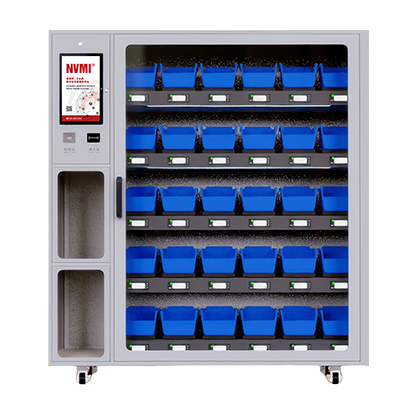
A well-designed NVMI inventory process combines buyer-defined operating requirements, supplier replenishment capability, actual consumption data, and clear exception rules. Safety stock remains an important control parameter, but it should support an efficient replenishment process rather than permanently compensate for inaccurate inventory records, delayed shortage detection, or slow supplier response.
NVMI Safety Stock: How to Set and Review the Right Inventory Buffer
Quick Answer
The buyer and supplier should generally treat NVMI safety stock as a jointly managed inventory parameter. The buyer defines material criticality, production requirements, acceptable shortage exposure, storage limitations, and target material availability. The supplier contributes practical information about replenishment frequency, packaging quantities, delivery capability, and actual lead-time behavior. Inventory and consumption records then provide the operational evidence needed to establish and review the buffer.
There is no single safety stock calculation that should automatically be applied to every industrial SKU. The appropriate method depends on material consumption, demand variability, replenishment lead time, supply variability, storage capacity, material criticality, and the consequences of a shortage. Stable C-parts may support relatively simple inventory policies, while highly variable or production-critical materials may require more active review.
Key Takeaways
-
Safety stock protects against uncertainty and should not be confused with total inventory.
-
The buyer should define production risk, material criticality, and required availability.
-
The supplier should provide realistic replenishment frequency, packaging, and lead-time information.
-
Actual consumption and replenishment history should support safety-stock reviews.
-
Safety stock, minimum stock, reorder point, and maximum or target stock should be defined separately.
-
Increasing safety stock should not be the automatic response to every shortage.
-
NVMI inventory data can help identify whether a shortage resulted from demand variation, delayed replenishment, or an incorrect inventory parameter.
-
Safety-stock values should be reviewed when material usage, production conditions, or supplier performance changes.
Table of Contents
-
What safety stock does in NVMI
-
Who should set NVMI safety stock
-
What data should be reviewed
-
How to approach safety stock calculation
-
How replenishment lead time affects the buffer
-
How demand variability changes inventory requirements
-
Safety stock vs minimum stock and reorder point
-
When safety stock should be reviewed
-
How NVMI supports safety-stock monitoring
-
Implementation checklist
-
Frequently asked questions
What Does Safety Stock Actually Do in NVMI?
Safety stock is inventory reserved to provide protection when normal planning assumptions do not match actual operating conditions. Production may consume material faster than expected, replenishment may take longer than planned, or an unexpected event may temporarily interrupt the normal material flow.
The buffer provides additional time for the replenishment process to respond. However, it should not become a substitute for reliable inventory management. If a plant repeatedly experiences shortages because material withdrawals are not recorded promptly, simply increasing the buffer does not correct the information problem.
The same principle applies when supplier responsibility is unclear. A large quantity of stock can delay the appearance of a shortage, but the replenishment process can still fail later if nobody knows who is responsible for monitoring the inventory condition and initiating the next refill.
NVMI therefore works best when safety stock is one part of a wider control loop consisting of accurate material identification, inventory monitoring, shortage detection, supplier replenishment, incoming-material recording, and exception management.
Who Should Set NVMI Safety Stock?
Supplier-managed replenishment does not mean the supplier should unilaterally determine every inventory parameter. Safety-stock governance should reflect both the manufacturer's operational requirements and the supplier's ability to replenish material.
The buyer defines business and production requirements. Procurement, warehouse, supply-chain, and production teams understand how important each component is to factory operations. They should identify which materials can tolerate temporary shortages, which items could affect production continuity, and which storage locations have limited capacity.
The supplier contributes replenishment information. The supplier understands normal delivery frequency, packaging requirements, preparation time, logistics constraints, and supply-side conditions. These factors influence how quickly material can be restored after a replenishment condition occurs.
The inventory system contributes operational evidence. Digital records showing inventory quantity, consumption, shortage conditions, and replenishment activity can help both parties determine whether the configured parameter reflects real operating behavior.
|
Decision Area
|
Buyer Responsibility
|
Supplier Responsibility
|
|
Material criticality
|
Define operational and production impact
|
Provide relevant supply-risk information
|
|
Required availability
|
Define the business requirement
|
Confirm replenishment capability
|
|
Consumption information
|
Provide reliable inventory and usage data
|
Use the information for planning
|
|
Lead time
|
Monitor actual receipt performance
|
Provide realistic replenishment expectations
|
|
Safety-stock parameter
|
Approve the inventory policy
|
Recommend adjustments when supply conditions change
|
|
Exception review
|
Evaluate production and inventory impact
|
Evaluate supplier response and delivery issues
|
The exact approval process can differ between companies, but responsibility should be documented before automation is introduced. Important inventory parameters should have a clear owner and change-control process.
What Data Should Be Reviewed Before Setting Safety Stock?
Safety-stock decisions should begin with the actual behavior of the material. Useful inputs can include historical consumption, consumption variability, actual replenishment lead time, storage capacity, packaging requirements, shortage history, and known production changes.
-
Historical consumption: How much material is normally consumed during the selected review period?
-
Demand variability: How significantly does actual usage change around the normal level?
-
Replenishment lead time: How long does it normally take to restore inventory after a replenishment requirement is identified?
-
Lead-time variability: Is supplier response consistent, or does actual replenishment time change significantly?
-
Material criticality: What operational impact could occur if the item becomes temporarily unavailable?
-
Storage capacity: How much material can the assigned bin, cabinet, or warehouse location practically hold?
-
Packaging quantity: Does replenishment need to follow fixed box, package, or carton quantities?
-
Open replenishment: Is material already being prepared, shipped, or moved toward the inventory location?
-
Known production changes: Will an upcoming production plan significantly increase or reduce consumption?
Data quality is as important as the calculation method. A sophisticated formula cannot compensate for incomplete consumption records or inaccurate inventory quantities. Before changing a safety-stock value, teams should first confirm that the information used to support the decision reflects actual physical material movement.
How Should a Safety Stock Calculation Be Approached?
A practical safety stock calculation should match the material profile and the quality of available data. Manufacturers should avoid applying one mathematical rule to every SKU simply because it is easy to automate.
For a stable, repeatedly consumed fastener, historical usage combined with actual replenishment performance may provide enough information to establish an initial buffer. For a material with irregular demand or variable supplier response, the policy may require additional protection and more frequent review.
The calculation should also reflect operational impact. Two materials can have similar average consumption but very different shortage consequences. A standard consumable that can be substituted temporarily should not necessarily use the same policy as a component whose absence could interrupt a critical production process.
Companies with limited historical transaction data may also benefit from beginning with a controlled parameter and reviewing it after reliable consumption and replenishment data has been collected. Creating false precision from poor-quality data is not an improvement over a simple, clearly governed rule.
How Replenishment Lead Time Changes Inventory Risk
Lead time inventory considerations are important because replenishment cannot occur instantly. Once inventory reaches a defined condition, the supplier may still need time to confirm the requirement, prepare the material, arrange transportation, deliver it, complete receiving activities, and refill the final storage location.
A short and consistent replenishment cycle creates a different inventory requirement from a long or unpredictable cycle. If the supplier can replenish frequently and reliably, the inventory process can react more quickly to changes in consumption. If replenishment takes longer or actual delivery performance varies considerably, the plant remains exposed for a longer period.
Teams should therefore review actual replenishment history rather than relying only on a standard lead-time field in a purchasing system. If the configured safety stock appears too low, the cause may not be increasing demand. Actual supplier response may have become slower or less consistent.
Conversely, if replenishment performance improves significantly, an old inventory buffer may become larger than necessary. Safety-stock review should therefore consider both consumption and supply behavior.
How Demand Variability Changes NVMI Safety Stock
Demand variability describes how much actual usage changes over time. A fastener consumed at a stable rate on a continuous production line behaves differently from a maintenance component that may remain unused for an extended period and then experience several withdrawals during one maintenance event.
For stable, high-frequency materials, consumption history can provide a useful basis for inventory planning. Even these items, however, may experience temporary changes when production volume increases, an additional shift is introduced, rework increases, or a new product configuration enters production.
The NVMI review process should therefore consider known future changes alongside historical usage. Recent consumption alone may not represent next month's requirement when production planning has already identified a significant change.
At the same time, one unusual consumption event should not automatically redefine the permanent inventory policy. Teams should distinguish between a temporary exception and a structural change in material demand.
Safety Stock Is Not the Same as Minimum Stock or Reorder Point
Several inventory-control terms are often used together, but they represent different functions. Clearly defining them helps prevent confusion between procurement, suppliers, warehouse teams, and system administrators.
|
Inventory Parameter
|
Primary Purpose
|
|
Safety stock
|
Provides a protective buffer against demand or supply uncertainty.
|
|
Minimum stock
|
Represents a defined lower inventory condition within the selected control policy.
|
|
Reorder point
|
Defines the inventory position or condition that should initiate replenishment.
|
|
Maximum or target stock
|
Defines the desired inventory position after replenishment.
|
These parameters can be connected within an NVMI workflow. For example, reaching a configured minimum level can create a shortage signal, while the subsequent replenishment action restores inventory toward an agreed target quantity.
The NVMI product architecture supports shortage reminders based on configured minimum safety-stock conditions. The appropriate threshold, however, should be established according to the customer's material profile and operating policy rather than treated as a fixed value for every installation.
When Should NVMI Safety Stock Be Reviewed?
Safety stock should have both scheduled and exception-based reviews. A parameter that was appropriate when a project started may become unsuitable as consumption, production, suppliers, or logistics conditions change.
Scheduled reviews provide a regular opportunity to compare actual performance with the assumptions used when the parameter was established. Review frequency can differ by material category. High-frequency or critical materials may deserve closer attention than stable, low-risk items.
Exception-based reviews should occur when operating conditions suggest that the existing setting may no longer be appropriate.
Typical review triggers include:
-
Repeated shortage events
-
Persistent inventory significantly above normal requirements
-
Major changes in production volume
-
Changes in material usage patterns
-
Changes in supplier delivery frequency
-
Longer or shorter actual replenishment lead times
-
New packaging quantities
-
Changes in material criticality
-
Engineering or product changes
-
Relocation to a different inventory point
-
Repeated physical-versus-system inventory discrepancies
The outcome of a review does not always need to be an increase. The correct decision may be to increase, decrease, or maintain the existing buffer depending on the evidence.
How NVMI Supports Safety-Stock Monitoring
The NVMI intelligent material management approach combines smart inventory hardware with SaaS-based data management. The product system supports real-time inventory updating, material usage records, shortage reminders, replenishment information, and visual monitoring of material status.
These functions can help procurement and supply-chain teams evaluate safety-stock settings using actual inventory behavior rather than relying only on periodic manual counting. When material falls below a configured minimum safety-stock value, shortage information can be generated so the replenishment process can respond.
Different material environments can also require different physical inventory-control models. NVMI-H supports convenient open material collection for scenarios such as warehouse and production-line material management. NVMI-D uses an enclosed cabinet architecture for applications requiring stronger access control, authorization, and traceability. NVMI-X provides a mobile configuration that can adapt to changing workstation or production-line requirements.
The equipment itself does not determine the correct safety-stock quantity. Its role is to improve the visibility of physical inventory activity and provide data that managers and suppliers can use to maintain the replenishment policy.
Why Real-Time Inventory Visibility Matters
Periodic inventory counts provide a snapshot, but fast-moving industrial materials can change significantly between counting cycles. A configured safety-stock value is useful only when managers can compare it with sufficiently current inventory information.
Real-time or timely inventory visibility can help identify several different problems. A material may be approaching its threshold because consumption has genuinely increased. Another SKU may be low because a planned replenishment is delayed. A third may appear low because inventory was physically returned but the transaction was not recorded correctly.
These situations require different responses. Better visibility helps teams avoid treating every low-inventory condition as evidence that more permanent safety stock is required.
NVMI Safety Stock Implementation Checklist
-
Classify materials: Separate production-critical components, standard C-parts, fasteners, MRO supplies, and irregular-demand items.
-
Review actual consumption: Use material-usage history rather than relying only on purchasing quantities.
-
Measure actual replenishment time: Compare planned lead time with real supplier performance.
-
Define shortage impact: Document what happens operationally if each material becomes unavailable.
-
Define the buffer method: Select a safety-stock approach appropriate to the material and available data.
-
Separate inventory parameters: Document safety stock, minimum stock, replenishment trigger, and target quantity clearly.
-
Assign parameter ownership: Define who recommends, approves, and changes inventory settings.
-
Configure shortage alerts: Define who receives an alert and what action should follow.
-
Include incoming inventory: Make planned or in-process replenishment visible before duplicate action is taken.
-
Define review frequency: Establish a practical review schedule by material category.
-
Define exception triggers: Review settings after major demand, production, lead-time, or supplier changes.
-
Validate physical inventory: Confirm that digital quantities continue to represent actual material conditions.
What KPIs Should Be Reviewed Together With Safety Stock?
Safety-stock performance should not be judged by inventory quantity alone. A plant can reduce inventory aggressively and create repeated shortages, or it can improve availability simply by holding excessive quantities. Neither result demonstrates a well-controlled replenishment process.
Useful project-specific indicators can include stockout events, emergency replenishments, actual supplier lead time, replenishment response time, average inventory position, shortage-alert frequency, inventory discrepancies, slow-moving inventory, and material availability at the point of use.
Management should review these indicators together. If material availability improves while inventory quantities also increase sharply, teams should determine whether the improvement came from better replenishment control or simply from holding a larger buffer.
Performance targets should be based on the factory's actual baseline, material profile, and operating requirements. They should not be treated as guaranteed outcomes of NVMI technology.
Image and Diagram Suggestions
-
Safety-stock responsibility diagram: Show buyer requirements, supplier replenishment information, and NVMI inventory data feeding the safety-stock review. ALT text: "NVMI safety stock responsibility between buyer supplier and smart inventory system."
-
Inventory parameter diagram: Show safety stock, minimum stock, reorder point, current inventory, and target stock as separate concepts. ALT text: "NVMI safety stock reorder point and target inventory explained."
-
Review trigger workflow: Show scheduled reviews plus exceptions such as demand changes, shortages, and lead-time variation. ALT text: "NVMI safety stock review process for industrial inventory management."
-
Smart replenishment loop: Show material pickup, inventory update, shortage warning, supplier replenishment, and refill confirmation. ALT text: "NVMI smart replenishment workflow using real-time inventory data."
Frequently Asked Questions
Who Should Own the NVMI Safety Stock Decision?
The exact governance model depends on the customer's operating process. A practical approach is for the buyer to define business requirements and acceptable shortage risk while the supplier contributes replenishment and lead-time information. Approval responsibility should be clearly documented.
Should Suppliers Be Allowed to Change Safety Stock Automatically?
Not necessarily. Digital systems can support recommendations, but changes to important inventory parameters should follow the manufacturer's agreed authorization process, especially for production-critical materials.
Is There One Safety Stock Calculation for Every NVMI Program?
No. Materials have different demand patterns, replenishment lead times, criticality, storage limitations, and data quality. The calculation approach should reflect the characteristics of the material and the actual replenishment process.
How Often Should NVMI Safety Stock Be Reviewed?
The review frequency should depend on material criticality and operating conditions. In addition to scheduled reviews, a parameter should be reconsidered when significant changes occur in consumption, supplier performance, replenishment lead time, packaging, production requirements, or shortage frequency.
Can Better Inventory Visibility Reduce the Need to Add More Safety Stock?
Better visibility can identify shortages caused by delayed information or replenishment problems, reducing the risk of treating every issue as a reason to increase permanent inventory. However, accurate data does not remove genuine demand and supply uncertainty, so an appropriate buffer may still be required.
Can NVMI Generate a Shortage Warning at a Defined Inventory Level?
Yes. The NVMI material-management architecture supports automatic shortage reminders when inventory falls below a configured minimum safety-stock condition. The correct threshold should be defined according to the customer's actual material usage and replenishment policy.
References & Sources
-
Bear Bit NVMI product documentation: real-time inventory monitoring, material usage records, minimum safety-stock warnings, shortage reminders, replenishment records, and SaaS material-management functions.
-
Project-specific demand patterns, supplier replenishment performance, storage limitations, and material criticality should be evaluated when establishing safety-stock policies.
-
Safety-stock calculations, target availability, review frequency, commercial responsibilities, and system interfaces should be confirmed according to each manufacturer's actual inventory process.
Conclusion: Treat Safety Stock as a Managed NVMI Parameter
NVMI safety stock should be managed as a dynamic inventory parameter rather than an arbitrary quantity of extra material. The buyer defines operational risk and material-availability requirements, the supplier contributes realistic replenishment information, and actual consumption and inventory records show whether the buffer continues to match factory conditions.
The strongest NVMI process combines safety stock with accurate inventory visibility, clearly defined replenishment signals, supplier responsibility, and regular exception review. When these elements work together, manufacturers can make better inventory decisions instead of responding to every shortage by automatically adding more stock.
For a practical NVMI project evaluation, prepare your material categories, SKU list, monthly consumption, demand variability, current safety-stock settings, supplier replenishment cadence, actual lead times, shortage pain points, deployment locations, user count, access-control requirements, system-integration scope, and target KPIs. These inputs provide the foundation for designing a smart inventory and replenishment process around the actual requirements of your plant.