Where Do Smart Cabinets Really Save Money? Cutting Waste, Preventing Loss, Avoiding Line Downtime, and Reducing Inventory Labor
smart cabinet cost savings is not a marketing slogan—it is a measurable outcome when fasteners and MRO consumables are managed with visibility, access control, and automated replenishment. In many factories, small parts like screws, bolts, nuts, washers, and rivets represent a surprisingly large hidden cost. Each item is inexpensive, but the combined impact of over-issuing, lost inventory, stockouts, emergency purchases, and manual counting adds up quickly. A smart cabinet changes the operating model from “open shelf + manual paperwork” to “controlled dispensing + real-time data.”
Procurement and maintenance teams often search for practical answers like “industrial vending machine ROI,” “how to reduce MRO spend,” “prevent stockouts on production line,” and “automated inventory cabinet.” This article breaks down exactly where the savings come from—reduced waste, fewer losses, less downtime, and fewer labor hours spent counting and chasing inventory.
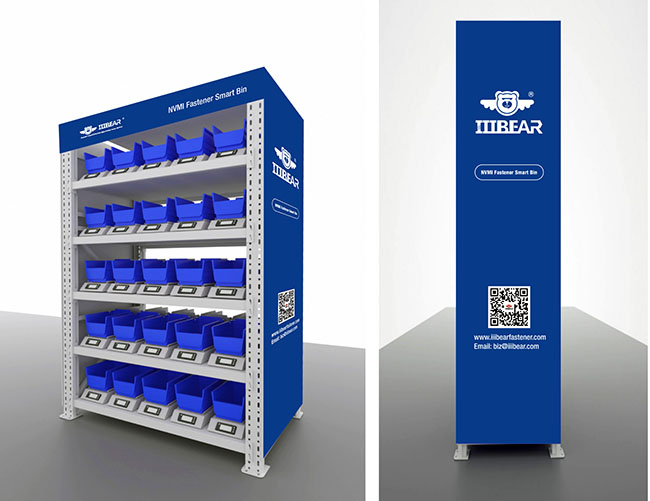
1) Reduce Waste: Stop Over-Issuing and “Just-in-Case” Hoarding
Waste in fasteners and MRO is rarely dramatic, but it is constant. When bins are open-access, users tend to grab extra “just in case,” take mixed quantities, or keep personal stashes at the workstation. The result is inflated consumption that procurement interprets as “real demand,” causing even more purchasing and even more shelf clutter.
Smart cabinets reduce this waste by introducing a controlled dispensing workflow:
- Right quantity at the right time: users take what they need for the job, not what they think they might need later.
- Usage visibility: consumption trends become clear by shift, line, team, or cost center.
- Policy enforcement: set limits by item or user group for high-usage consumables.
Over time, this creates a cleaner demand signal. Purchasing becomes more accurate, and the inventory you buy is closer to the inventory you actually use. That is the first layer of smart cabinet cost savings.
2) Prevent Loss: “Shrink” Is Real Even in Industrial Settings
Loss is not only theft. In industrial inventory, losses often come from unclear ownership and uncontrolled movement: items disappear into toolboxes, different work areas, contractor bags, or temporary jobs. Fasteners are easy to move and difficult to audit once they leave a bin.
Smart cabinets reduce shrink by combining access control and accountability:
- User authentication: badge, PIN, or role-based login restricts access to approved users.
- Transaction records: every withdrawal is linked to a person, time, and item SKU.
- Segmentation: store critical or high-value parts in locked compartments while keeping common items fast to access.
This does not create friction for the shop floor—it creates clarity. When inventory is traceable, losses drop because behavior changes and exceptions are visible. This is why many buyers researching “automated dispensing cabinet” are really trying to solve a loss and accountability problem.
3) Lower Line Downtime: Stockouts Cost More Than the Fastener
For production, the most expensive failure mode is a missing part at the wrong time. A single stockout of a small screw or washer can stop an assembly step, trigger a rushed internal transfer, or force an emergency purchase. Even if downtime is only 10–30 minutes, the cost is far greater than the part itself—especially when multiple operators are waiting.
Smart cabinets attack stockouts with real-time inventory status and replenishment rules:
- Min/Max levels: set reorder thresholds based on actual consumption, not estimates.
- Automated alerts: low stock is flagged before it becomes a line-stopping event.
- Consistent availability: the cabinet acts as a controlled buffer between demand variability and supplier lead time.
Many factories search “prevent production line stockouts” because the true problem is not purchasing—it's visibility. A smart cabinet turns availability into a managed KPI instead of a daily fire drill.
4) Reduce Inventory Labor: Less Counting, Less Paperwork, Fewer Disputes
Traditional MRO and fastener management relies heavily on manual work: cycle counting, spreadsheet updates, issuing forms, chasing approvals, and reconciling discrepancies. Even a well-run storeroom spends significant labor hours maintaining accuracy—yet accuracy still suffers because movement is hard to track.
Smart cabinets reduce labor in three main ways:
- Automated transaction capture: dispensing records replace handwritten logs.
- Faster cycle counts: the system provides inventory snapshots and exceptions that focus counting where it matters.
- Cleaner reporting: procurement and supervisors get usage and replenishment reports without building them manually.
This is especially valuable for high-SKU environments. Fastener storerooms may have hundreds or thousands of SKUs—most low value but high disruption when missing. Smart cabinets shift labor from repetitive counting to proactive control.
Smart Cabinet Cost Savings: What to Measure for a Real ROI Case
To make the savings visible, measure the “before vs after” metrics that leadership cares about. A practical ROI model for an automated inventory cabinet often includes:
- Consumption reduction: compare monthly usage value for controlled SKUs (waste reduction).
- Stockout incidents: number of line interruptions or emergency buys (downtime avoidance).
- Inventory turns and on-hand value: lower excess stock while protecting availability.
- Labor hours: time spent on issuing, counting, and reconciling inventory.
- Loss/shrink: discrepancy rate between recorded and physical inventory.
These are exactly the outcomes people are searching for when they type “industrial vending machine ROI” or “reduce MRO spend.” The best implementations make savings measurable within the first few months by focusing on high-consumption and high-disruption items first.
Best-Fit Use Cases: Fasteners and MRO Items That Deliver Quick Wins
Not every item needs the same control level. Smart cabinets deliver the fastest impact with:
- High-frequency fasteners: common screws, nuts, washers, rivets used daily across lines.
- Critical “line-stopper” parts: low cost but high downtime impact when missing.
- Items prone to over-issuing: consumables that people tend to “grab extra.”
- Contractor-controlled inventory: where accountability is hard without traceability.
Once these are stabilized, you can expand to broader SKU coverage, integrate replenishment routines, and align dispensing with cost centers and departments.
How Bear Bit Makes Smart Cabinet Savings Practical
A smart cabinet project succeeds when it is easy for operators and transparent for managers. Bear Bit focuses on smart cabinet deployment for fasteners and MRO parts with the goal of reducing waste, controlling access, improving availability, and lowering inventory workload—without slowing down the shop floor. With proper SKU selection, min/max settings, and reporting, smart cabinet cost savings become a predictable operational improvement rather than a one-time “tool purchase.”
Conclusion
So where do smart cabinets really save money? They cut waste by preventing over-issuing, reduce loss through accountability, avoid line downtime by preventing stockouts, and reduce inventory labor by automating transactions and reporting. When fasteners and MRO are controlled with real-time visibility, the factory spends less time reacting and more time producing.