Enclosed smart cabinet solutions are becoming an essential part of modern industrial material management, especially for factories that need secure access control, real-time inventory visibility, and traceable material usage. In production environments where fasteners, MRO parts, tools, electronic components, and spare parts are frequently issued and returned, traditional storerooms often create delays, manual errors, and unclear responsibility. A digital enclosed cabinet helps manufacturers move from passive storage to active, intelligent inventory control.
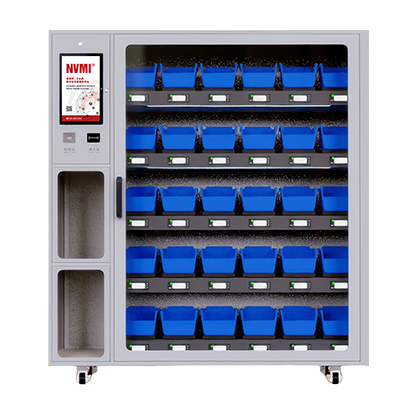
Why Enclosed Smart Cabinets Matter in Modern Factories
For many manufacturing companies, auxiliary materials and spare parts are small in size but critical to production continuity. When these items are stored on open shelves or managed through manual logs, it becomes difficult to know who picked up materials, when they were taken, how many were used, and whether stock levels are still safe. This lack of visibility can lead to urgent purchasing, excessive inventory, misplaced materials, and production interruptions.
An enclosed smart cabinet creates a controlled dispensing environment. Instead of allowing unrestricted access, the cabinet uses authentication methods such as card access, code access, scan access, or facial recognition, depending on the configuration. Only authorized personnel can open the cabinet or access specific materials. This makes it especially useful for high-value parts, safety-related components, calibrated tools, or materials that require strict usage records.
Enclosed Smart Cabinet with Access Control and Traceability
The core value of an enclosed smart cabinet is not only physical storage. Its greater value comes from combining cabinet hardware, smart units, sensing technology, and cloud-based inventory software. When a worker retrieves materials, the system records the transaction automatically. This allows managers to review material pickup records, user identity, time, item details, and quantity changes without relying on handwritten forms or delayed ERP input.
For procurement managers and warehouse supervisors, this traceability helps reduce blind spots in daily material flow. When usage data becomes clear, it is easier to identify abnormal consumption, improve replenishment planning, and reduce disputes between production, warehouse, and purchasing teams. For factory managers, the enclosed structure also helps protect materials from unauthorized removal, dust, accidental loss, or uncontrolled access.
Real-Time Inventory Visibility for MRO and Production Materials
One of the most common problems in MRO and spare parts management is the gap between book inventory and actual inventory. Manual stocktaking takes time, and data is often updated after materials have already been used. A smart cabinet with sensing technology can update inventory records in real time, helping teams reduce manual counting and improve inventory accuracy.
With real-time inventory monitoring, managers can see stock status through the system instead of checking shelves one by one. When materials fall below the preset safety stock level, the system can generate shortage reminders to support timely replenishment. This is useful for production lines, maintenance storerooms, transit warehouses, and distributed factory locations where material demand changes frequently.
Controlled Dispensing for 24/7 Material Pickup
Factories often operate across multiple shifts, but storeroom staff may not always be available. An enclosed smart cabinet supports self-service material pickup based on user permissions, allowing authorized workers to access needed parts at different times without waiting for manual approval at a service window. This can improve convenience for production and maintenance teams while keeping management records complete.
The closed cabinet design is especially suitable for high-frequency and decentralized usage scenarios. Workers can retrieve approved materials near the workstation, maintenance area, or production line, while managers still maintain visibility over inventory movement. This helps reduce unnecessary walking time, repeated communication, and low-value administrative work.
How Smart Cabinet Software Improves Replenishment
A modern enclosed smart cabinet should connect hardware data with a digital inventory platform. Through system records, enterprises can monitor material pickup, return, replenishment, stock level changes, and user behavior. This data provides a stronger basis for replenishment decisions than estimates or periodic manual reports.
With the intelligent material management solution from NVMI, manufacturers can combine smart cabinet equipment with digital management software to support inventory control, supply management, material requisition management, and replenishment visibility. Instead of purchasing large amounts of stock based on uncertainty, companies can use actual consumption data to plan more efficiently.
Application Scenarios for Enclosed Smart Cabinets
Enclosed smart cabinets can be used in many industrial environments. In automotive and robotics manufacturing, they can manage fasteners, tools, sensors, and assembly components near production lines. In electronics production, they can support controlled access to small parts and consumables. In power equipment, pipeline valve, energy storage, and maintenance operations, they can help manage spare parts and materials that must be available but controlled.
They are also suitable for warehouses that need stronger accountability. When material flow is connected to user permissions and system records, warehouse managers can reduce informal pickup behavior and improve compliance with internal material procedures. For industrial distributors, smart cabinet deployment can also support vendor-managed inventory models, helping customers maintain stock availability while giving suppliers clearer replenishment data.
Choosing the Right Enclosed Smart Cabinet System
When evaluating an enclosed smart cabinet, companies should look beyond the cabinet shell. Important factors include access control options, smart unit compatibility, inventory monitoring capability, software usability, network connection, replenishment alerts, reporting functions, and deployment flexibility. The system should match the company’s workflow instead of forcing the factory to rebuild its entire material process.
For many manufacturers, the best approach is to start with materials that have high usage frequency, high management difficulty, or high impact on production continuity. These may include MRO spare parts, fasteners, tools, consumables, and critical maintenance materials. After the first deployment proves stable, the solution can be expanded to more production areas, warehouses, or branch sites.
Building a Smarter Industrial Inventory System
An enclosed smart cabinet helps factories create a more transparent, secure, and efficient material management process. It reduces dependence on manual records, strengthens access control, supports real-time stock visibility, and provides data for better procurement and replenishment decisions. For industrial companies moving toward digital warehouse transformation, it is a practical step toward smarter supply chain management.
As manufacturing environments become more complex, material management can no longer rely only on open shelves, paper records, and delayed inventory updates. A connected enclosed cabinet gives enterprises a better way to control materials, support production, and improve operational discipline. By combining secure storage with intelligent inventory data, factories can make everyday material flow simpler, more traceable, and more reliable.