Line side vs warehouse smart cabinet is a placement decision that affects how quickly people can obtain materials, who replenishes them and which inventory events become visible. A cabinet beside an assembly station serves the point of use. A cabinet in a warehouse serves a central storage and issue process. Both can support connected inventory management, but they solve different operational problems. The best first location is the one where a defined group of materials, users and replenishment responsibilities can be tested clearly.
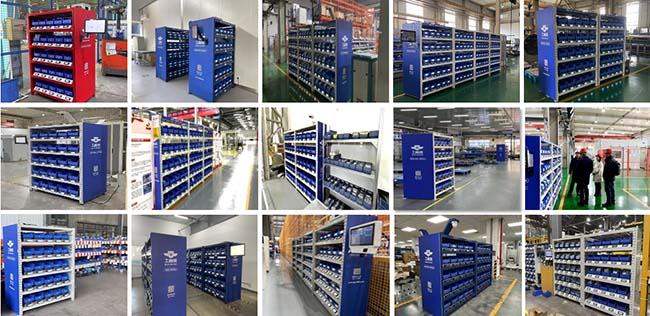
Many manufacturers begin with a list of cabinet features and then search for available floor space. A more useful approach starts with material movement. Where do shortages become visible? How far do operators travel to collect parts? Are warehouse staff issuing items, or do production teams pick them directly? Does each collection need user authorization? The answers determine whether line-side inventory, a warehouse smart cabinet or a combination should be evaluated first.
Line Side vs Warehouse Smart Cabinet: A Practical Deployment Guide
Quick Answer
Start line-side when a defined set of frequently used materials is repeatedly collected near production and the team can assign clear ownership for replenishment. Start in the warehouse when several departments draw from a common stock point, material issue requires managed access, or the first priority is to improve visibility at a central handover location. If demand patterns and material ownership are unclear, map the current workflow and choose a limited pilot area before ordering cabinets for multiple locations.
The first deployment does not have to establish a permanent rule for every SKU. A plant may eventually place high-use fasteners near workstations while keeping slower-moving, controlled or bulky materials in a central store. The initial project should produce reliable operating data and a repeatable process for deciding what belongs at each location.
Key Takeaways
- Choose the first site by material flow, user needs and replenishment ownership rather than available floor space alone.
- Line-side placement suits suitable high-frequency materials that must be close to the work.
- Warehouse placement suits shared stock, central receiving and issue workflows, and materials that need coordinated control.
- Open access and controlled access are separate decisions from cabinet location.
- Define the stock-transfer boundary between warehouse and line-side locations before integrating inventory data.
- Evaluate a pilot with site-specific measures rather than assuming a cabinet will deliver a fixed reduction in cost or shortages.
Table of Contents
- What changes with cabinet location?
- When should line-side deployment come first?
- When should warehouse deployment come first?
- How to compare the two locations
- Which SKUs belong in the first cabinet?
- How should replenishment work?
- How to run a useful pilot
- Frequently asked questions
What Changes When a Cabinet Moves from the Warehouse to the Line?
A warehouse smart cabinet sits within a central material-management process. Stock may arrive through receiving, be checked and then be placed into assigned bins. Users come to the cabinet, or warehouse staff collect materials for them. The warehouse team can often supervise replenishment and investigate differences in stock records at one location. This arrangement is useful when many users or departments share materials that do not need to sit beside every workstation.
A line-side cabinet places selected stock near the operation that consumes it. Operators can collect appropriate materials without returning to a central store for each small request. The inventory task changes accordingly: the plant must decide how stock reaches the line, who refills the cabinet, how consumption is captured and when the warehouse should prepare another transfer. Moving material closer to production can make access more convenient, but it also creates another stock location that needs ownership and accurate records.
For this reason, placement should be evaluated as a workflow design. The question is not simply how far a cabinet can be moved. It is whether receiving, storage, picking, transfer, consumption and replenishment remain clear after the cabinet is installed.
When Should Line-Side Deployment Come First?
Line-side deployment is a practical starting point when repeated material trips interrupt a defined production area. Typical candidates include commonly used fasteners and other suitable industrial consumables with stable identities, manageable bin sizes and frequent demand. The first group should be small enough for the project team to validate item setup, pick behavior and replenishment thresholds without having to redesign the whole warehouse.
Look for a workstation or production zone where employees already know which materials they need and where those materials are currently stored. If parts are spread across shelves, drawers and temporary boxes, a connected cabinet can give each selected SKU an assigned location and make stock changes easier to review. The benefit to test is the fit between point-of-use access and the actual operating routine; no time-saving figure should be assumed before measuring the current process.
Open-access storage may fit materials that operators are permitted to collect directly. The NVMI-H open smart cabinet connects direct picking from bins with weight-sensing inventory information. Its current product page describes a single-sided option with 25 sensing modules and a double-sided option with 50. The selected configuration still depends on the SKU mix, available space and access direction at the site.
Line-side placement is less convincing when the selected materials are rarely used, demand changes unpredictably between distant departments, or the proposed area cannot support safe access and regular restocking. The team should also check whether a nearby cabinet would duplicate a functioning supermarket or create an extra inventory balance without improving the handover process.
When Should Warehouse Deployment Come First?
A central warehouse or tool-room location can be the better first pilot when materials are shared across several lines. It gives the project a defined receiving point, fewer stock locations to reconcile and an existing team responsible for inventory control. It may also be easier to observe how different users collect materials and how replenishment staff resolve exceptions.
Warehouse-first deployment is relevant when the plant wants to examine controlled material issue. The NVMI-D enclosed smart cabinet combines enclosed storage, configured identity verification and sensing-based material records. Its published standard configuration has 30 sensing modules. The access method, permissions and exact material workflow should be confirmed for the project.
A warehouse cabinet does not automatically solve a line-side availability problem. If operators still need to travel a long distance for a frequently used screw or maintenance consumable, the central cabinet may improve stock visibility while leaving the collection route largely unchanged. The pilot should therefore state which problem it is measuring: central issue control, stock data, user traceability, line-side availability or a combination.
Warehouse-first can also prepare the data foundation for later point-of-use deployment. The team can clean the SKU master, confirm units of measure and observe actual usage before selecting which items justify a smaller stock position near production.
Line Side vs Warehouse Smart Cabinet: Decision Matrix
Use the following questions during a site survey. The answers are directional, not automatic rules; a material may require a different placement because of handling, security or process constraints.
| Decision factor | Line-side starting point | Warehouse starting point |
|---|---|---|
| Primary users | A defined production team needs frequent direct access | Several teams draw from one shared stock location |
| Material demand | Selected SKUs are picked repeatedly near a work area | Items serve multiple areas or are collected less often |
| Current problem | Repeated trips, scattered point-of-use stock or late shortage visibility | Unclear central balances, manual issue records or shared-stock control |
| Access policy | Direct picking suits the selected materials, or controlled access can be designed at the line | Central authorization and issue review fit the existing process |
| Replenishment owner | A person or team can refill and review the line-side stock point | The warehouse team already manages receiving and restocking |
| Layout | There is suitable space near the task and a workable replenishment route | A central location provides access for multiple users and stock handlers |
If neither column describes the current operation well, do not force a location choice based on the cabinet alone. First identify where each material is received, stored, issued and consumed. A short process map can expose missing ownership or duplicate stock before the team changes its physical layout.
Choose Pilot SKUs by Use and Handling Requirements
A long SKU list is not a deployment plan. Begin with items whose descriptions, packaging units and current locations can be confirmed. For each SKU, record its material category, dimensions, unit weight, usual pick quantity, available consumption history, existing stock point and supplier replenishment process. These fields help determine whether the item fits an assigned sensing unit and whether stock changes can be interpreted consistently.
High-turnover items are often useful pilot candidates because users interact with them frequently enough to reveal workflow issues. They are not automatically suitable for line-side storage. Check whether several lines use the same part, whether bulk cartons must be broken into smaller quantities, and whether the line has room for the stock quantity required between replenishment visits.
Also separate item-level restrictions from location-level convenience. A fast-moving consumable may need authorization because of the site's internal policy. A low-value part may be available for open picking but used too rarely to justify a dedicated line-side position. Review each exception instead of treating all fasteners, PPE or MRO products as one category.
Before finalizing a cabinet layout, confirm the physical fit of each item and its intended bin. The number of SKUs alone cannot determine the number of cabinets. A large or heavy item may consume more space than several small parts, while different units of measure can complicate quantity interpretation. The selected module arrangement must be checked against the actual materials and the project's configured sensing requirements.
Define the Replenishment Path Before Setting Alerts
At a warehouse cabinet, replenishment may move directly from receiving or bulk storage into the assigned smart units. At a line-side cabinet, it often involves an additional movement from central stock to the point of use. That extra transfer needs a clear transaction boundary. Decide when the warehouse balance decreases, when the line-side balance increases and who confirms the quantity placed in the cabinet.
A low-stock alert is useful only when someone owns the response. Document who receives the signal, checks its validity, prepares material, delivers it, records the refill and resolves a mismatch. If a supplier participates in the process, specify which data the supplier receives and who approves the next replenishment action. An alert should support a defined workflow rather than stand in for one.
Thresholds should reflect the material's usage pattern, replenishment interval and practical bin capacity. A plant may use different settings for the same SKU at the warehouse and the line because the two locations play different roles. Review unusual events, such as a sudden production change or an item substitution, rather than expecting one fixed threshold to handle every situation.
Check Space, Movement and Access at the Proposed Site
Walk the intended location with production, warehouse and facility staff. Measure the usable footprint and confirm the direction from which people will reach the bins. Check nearby pedestrian and material-handling routes, cabinet service access, power and connectivity. An available corner is not necessarily a usable material point if a refill cart cannot reach it or operators cannot approach the cabinet during normal work.
For production areas that change layout, the NVMI-X mobile open smart cabinet is designed for flexible placement and direct access to materials. Its movement route, operating position and service connections still need a site review. Mobility is valuable when the point of use moves; it should not be used as a reason to leave replenishment responsibility or stock-location records undefined.
At a central store, consider opening hours, shift handovers and the route users take from different departments. If authorized employees need access outside staffed warehouse hours, the access policy and exception process should be part of the deployment specification. Cabinet location and access method should be chosen together.
Run One Pilot That Can Answer the Placement Question
A useful pilot has a defined area, selected materials, named process owners and a review date. Record the current situation before installation: where materials are kept, how users obtain them, how often stock is checked and how shortages are reported. Use the same definitions during the pilot so the team can compare workflows without relying on impressions.
For a line-side pilot, observe whether the assigned SKUs fit the bins, whether users pick from the intended location, how often replenishment visits are required and how discrepancies are investigated. For a warehouse pilot, examine user access, receiving and issue records, shared-stock visibility and the handling of requests from different departments. In either case, record exceptions as well as normal transactions.
Choose measures that match the stated objective. These might include material availability at the point of use, time spent obtaining an item, the number of unplanned replenishment requests, the completeness of issue records and the frequency of stock corrections. Define each measure and its baseline locally. A change observed at one pilot site should not be presented as a guaranteed result for another plant.
At the review, ask a practical question: did the cabinet improve the specific material process the team set out to test? If the answer is mixed, identify whether the cause is placement, SKU selection, stock rules, training or integration. That distinction helps the next location perform better.
Example Deployment Paths
Assembly line with repeated fastener picks: Start with a selected group of frequently used, clearly specified parts near the work area. Assign responsibility for restocking from the warehouse. Review pick frequency, bin fit and material availability before expanding to other lines.
Shared maintenance store: Start at the central collection point if several teams use the same materials and issue records matter. Define who may collect, who replenishes and how a material movement is reviewed. Move only the appropriate repeat-use items closer to maintenance work areas after observing actual demand.
Changing production layout: Consider a flexible point-of-use arrangement when workstations move. Document each operating location and the process for moving, reconnecting and refilling the cabinet. Keep the stock record tied to a clear physical location throughout the move.
Frequently Asked Questions
Is a line-side smart cabinet always better for fasteners?
No. Frequently used fasteners may benefit from point-of-use access, but the correct location depends on actual demand, packaging, space and replenishment ownership. Parts shared by many distant teams may be easier to manage centrally until their consumption pattern is clear.
Can an enclosed cabinet be deployed beside a production line?
Yes. Location and access design are separate choices. If a line-side material group requires authorization before collection, an enclosed workflow can be evaluated at the production area. Confirm user permissions, available space and the effect of the access step on daily work.
Should the warehouse cabinet or line-side cabinet own the inventory balance?
Both are physical stock locations when both hold material. The project should define how a transfer between them is recorded and which system maintains each balance. Avoid treating a refill at the line as new stock without accounting for the reduction at its source.
How many SKUs should be included in the first pilot?
There is no universal number. Select a manageable set with reliable item data and enough real use to test the workflow. Item size, weight, bin allocation, replenishment frequency and user behavior matter more than meeting an arbitrary SKU target.
Does real-time inventory data remove the need for physical checks?
No. Connected sensing can provide timely stock information, while receiving mistakes, incorrect item placement, exceptions and stock corrections still need an operating procedure. Define when staff verify a bin and how they resolve a difference between the recorded and observed stock.
Can a pilot begin without ERP or WMS integration?
That depends on the pilot objective and the approved project scope. A limited workflow may be evaluated with its own clearly managed records, but the team must specify how item data, users, transfers and replenishment decisions will be handled. Confirm any planned ERP or WMS interface, fields and timing before presenting it as part of the deployment.
References & Sources
- Bear Bit product information: NVMI-H Open Smart Cabinet, including its direct-picking workflow and single- or double-sided sensing configurations.
- Bear Bit product information: NVMI-D Enclosed Smart Cabinet, including its identity-based access workflow and published standard sensing configuration.
- Bear Bit product information: NVMI-X Mobile Open Smart Cabinet, including its flexible placement and open-access workflow.
Conclusion: Deploy Where the First Problem Can Be Measured
The line side vs warehouse smart cabinet decision should be grounded in a specific material flow. Start near production when selected materials are picked repeatedly at a defined point of use and the team can manage refills there. Start centrally when shared stock, controlled issue or warehouse records are the first problem to address. Then use the pilot's operating data to decide which materials and locations should follow.
To discuss a suitable NVMI deployment, share your SKU list, material categories, item sizes and weights, current storage and issue process, expected user count, access-control requirements, available floor space, mobility needs, integration scope, deployment locations and target KPIs. Those details allow the cabinet configuration and replenishment workflow to be reviewed against your actual site.