NVMI onboarding checklist planning should begin before smart cabinets, smart bins, suppliers, or software workflows are activated. A successful NVMI implementation depends on clear material scope, accurate inventory data, defined buyer and supplier responsibilities, practical replenishment rules, user permissions, and a controlled pilot. If these elements are not agreed during onboarding, digital inventory technology can make information more visible without resolving the underlying process gaps.
For manufacturers managing fasteners, C-parts, MRO consumables, maintenance materials, tools, and line-side inventory, onboarding is especially important because a single project can involve procurement, warehouse operations, production, suppliers, IT teams, and end users. Each group needs to understand which materials are included, how inventory changes are recorded, what creates a replenishment signal, who responds to that signal, and how exceptions are handled.
This checklist provides a practical framework for manufacturers and suppliers preparing an NVMI program, from initial scope definition through pilot acceptance and ongoing governance.
NVMI Onboarding Checklist: From Material Scope to Supplier Replenishment
Quick Answer
A practical NVMI onboarding process should complete eight core tasks before full deployment: define the project objective, select the initial materials and locations, clean material master data, assign buyer and supplier responsibilities, define inventory and consumption data, establish replenishment rules, configure user and access requirements, and validate the complete workflow through a controlled pilot.
The objective is not simply to install inventory equipment. The project should create a repeatable NVMI workflow in which physical material consumption becomes reliable inventory information, inventory conditions create appropriate replenishment signals, suppliers understand when they are expected to respond, and both parties can review the resulting data.
Key Takeaways
-
Define the business problem before selecting equipment or setting replenishment parameters.
-
Start with a controlled group of materials rather than attempting to onboard every SKU at once.
-
Clean SKU, description, specification, location, and supplier data before activation.
-
Document buyer, supplier, warehouse, production, and system responsibilities.
-
Define what counts as pickup, return, replenishment, adjustment, and shortage.
-
Agree on minimum, target, safety-stock, or other replenishment logic before supplier onboarding.
-
Choose open, enclosed, or mobile NVMI equipment according to actual material flow and access requirements.
-
Validate transactions, shortage signals, supplier response, and exception handling during a pilot.
-
Set project-specific KPIs and review rules before scaling the program.
Table of Contents
-
Define the NVMI project objective
-
Select materials and locations
-
Prepare material master data
-
Define buyer and supplier responsibilities
-
Define inventory and consumption data
-
Set replenishment rules
-
Clarify inventory ownership
-
Define users and access control
-
Select the correct NVMI deployment model
-
Plan system and data integration
-
Run the pilot and acceptance test
-
Establish post-launch governance
-
Frequently asked questions
1. Define the NVMI Project Objective Before Onboarding Suppliers
The first onboarding meeting should answer a simple question: what operational problem is the project intended to solve?
Different factories can adopt NVMI for different reasons. One plant may be struggling with repeated fastener shortages. Another may have too much manual counting in an MRO storeroom. A third may need better traceability for controlled materials. Another may want suppliers to respond directly to consumption information instead of waiting for repeated manual replenishment requests.
These problems require different configurations and KPIs. The project team should therefore document the current workflow and identify the specific control points that need improvement.
Useful baseline questions include:
-
How is inventory currently counted?
-
How are material withdrawals recorded?
-
Who identifies that stock is running low?
-
Who creates or approves replenishment requests?
-
How does the supplier receive demand information?
-
Where do shortages most frequently occur?
-
Which tasks consume the most warehouse or procurement time?
-
Which inventory discrepancies create operational problems?
A clear project objective prevents the implementation from becoming a general technology installation without a defined operating result.
2. Select the Initial Materials and Locations
The next step in the NVMI onboarding checklist is determining which materials will enter the first phase. The project does not need to include every SKU in the factory.
Strong pilot candidates often have repeatable consumption, clear specifications, established suppliers, frequent replenishment activity, and a defined physical storage location. Fasteners, C-parts, selected MRO consumables, and other recurring indirect materials can be suitable when their usage creates meaningful administrative workload.
For each candidate material, collect:
-
SKU or material code
-
Description and specification
-
Unit of measure
-
Supplier
-
Storage location
-
Historical consumption
-
Transaction frequency
-
Current inventory level
-
Current replenishment method
-
Typical packaging quantity
-
Material criticality
-
Approximate size and weight
-
Required access-control level
Locations should also be mapped. Central warehouses, line-side inventory points, maintenance storerooms, transit areas, and mobile production locations can have different replenishment requirements. The onboarding plan should define exactly where each selected material will be monitored and replenished.
3. Clean Material Master Data Before NVMI Implementation
NVMI implementation depends on reliable material identification. If the digital system monitors the wrong SKU, duplicate material codes, unclear units of measure, or outdated supplier mappings, automatic inventory updates can make the problem more visible without making it more accurate.
Before activation, buyer and supplier teams should confirm that each item has a consistent identity. Similar fasteners should not be treated as interchangeable unless the manufacturer has explicitly approved that relationship.
|
Master Data Field
|
Onboarding Check
|
|
Material code
|
Unique and active
|
|
Description
|
Clear enough to distinguish similar materials
|
|
Specification
|
Matches the physical component
|
|
Unit of measure
|
Consistent across inventory and replenishment
|
|
Supplier
|
Approved and mapped to the correct SKU
|
|
Location
|
Mapped to the actual storage point
|
|
Pack quantity
|
Confirmed where it affects replenishment
|
|
Status
|
Obsolete and inactive items removed from the active scope
|
This cleanup should be completed before automatic shortage or replenishment rules become operational.
4. Define Buyer, Supplier and Internal Team Responsibilities
Supplier onboarding requires more than giving a supplier access to inventory information. The program must define exactly what the supplier is expected to do with that information.
The buyer should typically retain control over approved materials, material criticality, production requirements, inventory policy, supplier selection, access rules, and commercial terms. The supplier may take responsibility for monitoring agreed inventory conditions and planning replenishment within the approved process.
The warehouse team may remain responsible for receiving or internal movement. Production users may be responsible for following the correct pickup or return process. IT or digitalization teams may manage interfaces and user access. Each role should be documented.
|
Process
|
Typical Responsibility Question
|
|
SKU approval
|
Who authorizes a material to enter the program?
|
|
Inventory parameter
|
Who proposes and approves minimum or target quantities?
|
|
Consumption monitoring
|
Who reviews abnormal usage?
|
|
Replenishment
|
Who acts when inventory reaches the agreed condition?
|
|
Receiving
|
Who records replenished material?
|
|
Discrepancies
|
Who investigates differences between physical and digital stock?
|
|
Emergency shortage
|
Who owns escalation?
|
|
Parameter changes
|
Who can approve changes after launch?
|
An NVMI project becomes difficult to govern when several parties assume another team is responsible for the same task.
5. Define Inventory, Pickup, Return and Replenishment Data
NVMI relies on a consistent transaction model. The buyer and supplier should agree on what each inventory event means before data is shared.
Important data objects can include commodity information, stock information, pickup information, staff information, replenishment information, and supplier information. The NVMI system described in Bear Bit product documentation uses these types of records to support inventory monitoring and management decisions.
At minimum, the onboarding team should define:
-
What event reduces available inventory?
-
How is a material return recorded?
-
What event confirms supplier replenishment?
-
How are manual adjustments handled?
-
How is an incorrect transaction corrected?
-
What timestamp represents the transaction?
-
Which location owns the inventory record?
-
Which system is considered authoritative?
When traceability is required, additional data may include user identity, department, pickup time, return time, and transaction history. Not every open-access C-part requires the same level of user detail, so the data model should follow actual control requirements.
6. Define Smart Replenishment Logic Before Go-Live
Smart replenishment needs an agreed rule. A supplier should not be expected to look at an inventory dashboard and independently guess what quantity the manufacturer wants.
Possible control parameters include minimum stock, target stock, maximum stock, safety stock, packaging quantity, supplier lead time, consumption behavior, or other agreed conditions. The appropriate logic depends on the material and should not be treated as universally identical across all SKUs.
The onboarding team should document:
-
Which inventory condition creates a shortage signal?
-
Whether the signal is informational or requires immediate supplier action
-
Who receives the signal
-
How the replenishment quantity is determined
-
Whether open replenishment is considered before creating another requirement
-
How supplier packaging affects the refill quantity
-
What happens when consumption rises unexpectedly
-
How urgent shortages are escalated
Bear Bit NVMI documentation describes real-time inventory monitoring and automatic shortage information when material falls below a configured minimum safety-stock value. During onboarding, that threshold should be configured according to the customer's actual material policy rather than treated as a universal default.
7. Clarify Inventory Ownership Separately From Replenishment Responsibility
Supplier-managed replenishment and inventory ownership are separate decisions. A supplier can manage replenishment while inventory is already owned by the manufacturer, or the commercial arrangement can use supplier-owned consignment stock until a defined ownership-transfer event occurs.
Before the program begins, procurement and finance should confirm:
-
Who owns inventory when it arrives at the factory?
-
When does ownership transfer?
-
What event supports settlement or reconciliation?
-
How are unused returns treated?
-
Who is responsible for obsolete material?
-
How are discrepancies resolved?
The inventory technology should execute the agreed process; it should not define commercial ownership by itself.
8. Define User Access and Material-Control Requirements
Different materials need different access models. Frequently used standard fasteners may need rapid collection, while high-value tools, restricted components, or quality-critical materials may require user authentication and transaction traceability.
During onboarding, classify each material group according to access needs:
-
Open collection
-
Authorized user access
-
Individual transaction traceability
-
Controlled return
-
24/7 self-service requirements
-
Department or user restrictions
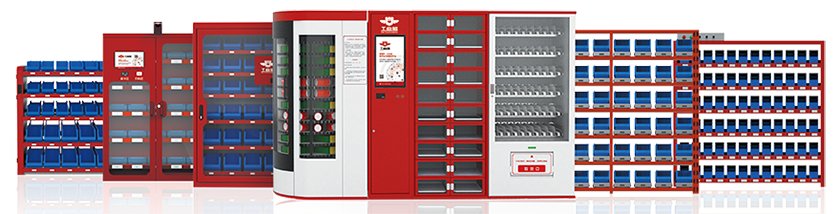
NVMI-D is designed for enclosed material management and supports access-control and monitoring functions. NVMI-H provides an open-access configuration for convenient material collection. These differences should be considered during inventory collaboration planning because supplier replenishment and user pickup are both influenced by the physical storage architecture.
9. Match the Physical NVMI Configuration to the Workflow
The NVMI intelligent material-management approach combines inventory equipment with SaaS-based management and digital inventory information.
For high-frequency materials in warehouse or production-line environments, the NVMI-H open smart inventory configuration can support convenient material collection while recording inventory activity.
Where stronger authorization and traceability are required, the NVMI-D enclosed smart inventory configuration can be evaluated. For production environments where storage must adapt to changing workstation requirements, a mobile configuration can be considered according to the project scope.
The correct selection should consider item dimensions, weight, SKU count, user behavior, required access control, floor space, mobility, and replenishment route. Equipment selection should follow the material flow rather than forcing every SKU into the same storage format.
10. Define System Integration and Data Ownership
Some NVMI projects can operate through a dedicated SaaS material-management workflow. Others need data exchange with ERP, MES, WMS, or supplier systems. Where supported by the confirmed project architecture, APIs or standard protocols can be used to exchange relevant data.
Integration onboarding should begin with data objects rather than software brand names. The project should determine which system owns:
-
Material master data
-
Point-of-use inventory
-
Pickup and return records
-
Supplier assignment
-
Replenishment parameters
-
Open replenishment status
-
User identity and permissions
The exact interface method, authentication, data mapping, update frequency, and exception handling should be technically confirmed for each project. Specific software compatibility should not be assumed before the required interface has been validated.
For related digital-material planning, review the smart warehouse technology resources.
11. Run an NVMI Pilot Before Full Deployment
The pilot should test the complete business process rather than only confirming that hardware powers on or inventory appears on a screen.
A useful pilot acceptance plan should test:
-
Initial inventory loading
-
Material pickup
-
Real-time or configured inventory update
-
Material return where applicable
-
Inventory crossing the shortage threshold
-
Generation of the replenishment signal
-
Supplier receipt or review of the requirement
-
Supplier replenishment response
-
Recording incoming material
-
Inventory discrepancy correction
-
User authentication where required
-
Exception handling when normal workflow is interrupted
The project team should compare digital records with actual physical movements throughout the test. If a transaction is difficult for users to complete, produces incorrect inventory information, or creates uncertainty for the supplier, the workflow should be corrected before expansion.
12. Define Pilot KPIs and Acceptance Criteria
An NVMI pilot needs measurable acceptance criteria, but performance targets should be based on the customer's own baseline. No universal percentage improvement should be treated as a guaranteed outcome.
Potential KPIs include:
-
Inventory-record completeness
-
Physical-versus-system discrepancy events
-
Shortage frequency
-
Emergency replenishment frequency
-
Supplier response time
-
Time between pickup and inventory update
-
Manual counting workload
-
Replenishment transaction completeness
-
User adoption and process compliance
The objective is to determine whether the new process is more controllable and whether the selected replenishment rules reflect actual material behavior.
13. Establish Post-Launch Governance
Onboarding does not end when the pilot is approved. Materials, demand, suppliers, production schedules, and users change over time. The project should define who maintains the process after launch.
Governance should include scheduled review of:
-
Active SKU scope
-
Material master changes
-
Consumption trends
-
Minimum and target inventory parameters
-
Repeated shortage events
-
Excess or slow-moving material
-
Supplier response performance
-
Access permissions
-
Inventory discrepancies
-
System and integration exceptions
A parameter that was appropriate at the start of the program may become unsuitable after production volume, supplier lead time, packaging, or material criticality changes.
Complete NVMI Onboarding Checklist
|
Phase
|
Required Check
|
Owner Confirmed?
|
|
Business case
|
Define the inventory or replenishment problem
|
Yes / No
|
|
Material scope
|
Confirm initial SKU list and locations
|
Yes / No
|
|
Master data
|
Validate code, description, specification and unit
|
Yes / No
|
|
Supplier
|
Confirm supplier responsibility and escalation
|
Yes / No
|
|
Inventory
|
Confirm initial physical quantity
|
Yes / No
|
|
Transactions
|
Define pickup, return, adjustment and refill
|
Yes / No
|
|
Replenishment
|
Approve minimum, target or other rules
|
Yes / No
|
|
Ownership
|
Confirm commercial inventory ownership
|
Yes / No
|
|
Users
|
Define permissions and authentication requirements
|
Yes / No
|
|
Equipment
|
Confirm open, enclosed or mobile architecture
|
Yes / No
|
|
Integration
|
Confirm required systems and data objects
|
Yes / No
|
|
Pilot
|
Complete end-to-end transaction testing
|
Yes / No
|
|
KPI
|
Establish baseline and acceptance criteria
|
Yes / No
|
|
Governance
|
Assign post-launch parameter and exception owners
|
Yes / No
|
Image and Diagram Suggestions
-
NVMI onboarding process map: Show scope definition, data preparation, supplier onboarding, equipment configuration, pilot and scale-up. ALT text: "NVMI onboarding checklist for manufacturers and suppliers."
-
Responsibility matrix: Show buyer, supplier, warehouse, production and IT responsibilities. ALT text: "NVMI workflow responsibility matrix for industrial inventory collaboration."
-
Digital replenishment flow: Show pickup, inventory update, shortage signal, supplier response and refill confirmation. ALT text: "NVMI smart replenishment workflow from material pickup to supplier refill."
-
Pilot acceptance diagram: Show master data, transactions, access control, replenishment and KPI checks. ALT text: "NVMI implementation pilot acceptance checklist for manufacturing."
Frequently Asked Questions
What Should Be Prepared Before Supplier Onboarding?
Prepare the initial SKU list, material specifications, storage locations, current inventory, historical consumption, replenishment parameters, supplier responsibilities, user requirements, and exception process. Incomplete master data should be corrected before activation.
Should Every Supplier Be Onboarded at the Same Time?
Not necessarily. A controlled pilot with selected materials and suppliers can make it easier to validate responsibilities and troubleshoot the workflow before expanding the program.
How Long Should an NVMI Pilot Run?
There is no universal duration. The pilot should generate enough pickup, shortage, replenishment, return, and exception transactions to validate the intended workflow. The appropriate period depends on material consumption frequency and supplier replenishment cadence.
Does NVMI Require ERP, MES or WMS Integration Before Launch?
No single architecture applies to every project. A dedicated SaaS workflow may be sufficient for some deployments, while other plants require data exchange with enterprise systems. Integration requirements should be determined from the required business process and technically confirmed.
Who Should Approve Replenishment Parameters?
The buyer should normally retain governance over operational requirements and acceptable inventory risk, with supplier input on replenishment capability and lead-time conditions. The exact approval workflow should be documented during onboarding.
What Happens After the NVMI Pilot Is Accepted?
The project team should review pilot exceptions, adjust parameters where necessary, document standard operating procedures, establish ongoing ownership, and then select the next materials, suppliers, or locations for scale-up.
References & Sources
-
Bear Bit NVMI product documentation: smart inventory equipment, real-time inventory monitoring, pickup information, replenishment information, shortage warnings, supplier information, access control, and SaaS-based material management.
-
Bear Bit NVMI project planning guidance: industrial B2B onboarding should define material scope, inventory workflow, supplier responsibilities, data requirements, replenishment rules, access needs, integration scope, pilot acceptance, and project-specific KPIs.
-
Technical integration, commercial ownership, supplier responsibility, replenishment parameters, and performance targets should be confirmed for each customer project before deployment.
Conclusion: Use the NVMI Onboarding Checklist to Build the Process Before Scaling
A successful NVMI onboarding checklist is not primarily an equipment checklist. It is an operating-model checklist. Manufacturers and suppliers need to agree on which materials are managed, how consumption is captured, how inventory status is interpreted, what triggers replenishment, who responds, and how exceptions are resolved.
The strongest NVMI implementations begin with clean data and a controlled scope. They then validate physical material movement, digital transactions, supplier response, and replenishment parameters through a pilot before scaling to additional SKUs or locations.
If you are preparing an NVMI project, compile your SKU list, material categories, current inventory workflow, monthly usage, stockout pain points, supplier model, user count, access-control requirements, integration scope, deployment locations, and target KPIs. These inputs provide the foundation for a project-specific onboarding plan and technical evaluation.
For configuration planning or a project-specific checklist, use the NVMI project discussion page to share your application requirements.