Two Bin System vs Smart Cabinet for Fastener Replenishment: How to Choose
Two bin system vs smart cabinet is a practical decision for any manufacturer trying to keep fasteners available without losing control of line-side stock. Both approaches can create a replenishment signal when supplies run low. They differ in how that signal is produced, what information the team can see and how much process and technical support the system requires.
A two-bin system uses a physical handover: operators consume one bin, then use the second while the empty bin signals a refill. A smart cabinet uses connected storage and defined stock thresholds to help teams monitor material movement and identify items requiring attention. Neither method can compensate for incorrect part identification, an unsuitable stock level or an alert that nobody owns. The right choice starts with the fasteners, the replenishment route and the decisions your team needs to make.
Quick Answer
Choose a two-bin system when demand is reasonably predictable, SKUs are easy to identify, refill routes are dependable and a visible empty-bin signal gives the team enough information to act. Consider a smart cabinet when you also need more timely stock visibility, material-use records, low-stock alerts across locations or configured access control. A hybrid approach can retain the simple two-bin picking routine while using connected inventory information to help supervisors and suppliers plan replenishment.
Key Takeaways
- A two-bin system is a physical pull signal; its reliability depends on bin discipline and a responsive refill route.
- A smart cabinet provides stock information and alerts, but people still need to review exceptions and complete replenishment.
- Fast-moving, low-value C-parts often need easy picking; selected or controlled materials may need different issue rules.
- Compare the full workflow, including identification, refill ownership and data needs, rather than cabinet hardware alone.
- Test the proposed method with real SKUs and operating shifts before expanding it.
Contents
- How the two-bin system works
- How a smart cabinet works
- Two bin system vs smart cabinet: key differences
- When to choose two bins
- When to consider a smart cabinet
- How to combine both methods
- Set replenishment levels and responsibilities
- Pilot and evaluation checklist
- Frequently asked questions
How Does a Two-Bin System Work?
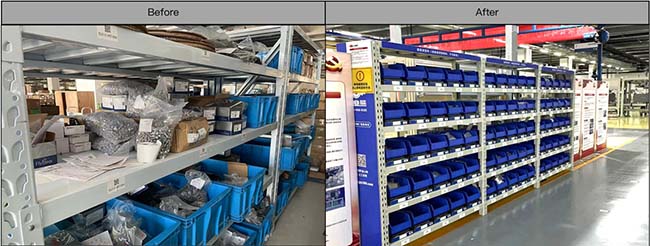
In a typical two-bin arrangement, two identified containers hold the same approved SKU at a point of use. Operators pick from the first bin. When it is empty, they move, turn or otherwise present it as the replenishment signal and begin picking from the second. A material handler, warehouse team or supplier collects the signal, refills the first bin and returns it to the assigned location.
The second bin must hold enough usable material to cover the complete response period—not merely the time it takes someone to notice the empty container. That period can include the next inspection round, warehouse picking, transport to the workstation and any supplier replenishment required upstream. If demand rises or the route is interrupted, the remaining stock may be insufficient.
This is a form of visual pull control. The empty container or its Kanban card communicates that material has been consumed and needs replacing. The method works best when the signal is unmistakable, the part number and quantity are defined, and the team follows a consistent route. If operators refill the first bin from an unrecorded box or start picking randomly from both bins, the trigger loses its meaning.
How Does a Smart Cabinet Support Replenishment?
A smart fastener cabinet connects an assigned storage location to inventory information. In Bear Bit’s NVMI-H open smart cabinet, weight-sensing units detect material changes as suitable items are added or removed. The connected platform lets the team review stock and consumption records and set low-stock thresholds for replenishment review.
This changes the form of the signal. Instead of waiting for someone to see and collect an empty bin, an assigned user can review a stock alert and decide what action is needed. The team may also be able to examine usage history when adjusting thresholds. The cabinet does not independently guarantee that a refill will happen: alert routing, stock availability, purchase approval, transport and refill confirmation remain part of the operating process.
Cabinet selection depends on access as well as replenishment. Open storage may suit frequently picked fasteners where direct access is appropriate. For selected items requiring configured identity verification and permissions, the NVMI-D enclosed smart cabinet supports a different collection workflow. Materials, bin layout and record requirements must be checked against the proposed model.
Two Bin System vs Smart Cabinet: Key Differences
| Decision factor | Two-bin system | Smart cabinet |
|---|---|---|
| Replenishment signal | An empty bin, moved container or Kanban card provides a visible physical signal. | A configured threshold and connected stock information flag an item for review. |
| Stock visibility | Staff inspect bins or receive signals during a scheduled route. | Authorized teams can review connected stock status, subject to the system configuration. |
| Consumption information | Bin turnover indicates use; detailed history requires an added recording step. | Material changes can contribute to digital stock and consumption records. |
| Access | Usually direct physical picking unless separate controls are added. | Open or permission-based collection can be evaluated by cabinet model. |
| Operating dependency | Clear labels, correct bin rotation and a dependable refill route. | Material setup, sensing suitability, power, connectivity, alert ownership and refilling. |
| Typical fit | Stable, high-frequency SKUs where a simple visual signal is sufficient. | Locations needing connected visibility, records or more structured access. |
| Common failure | The empty bin is missed, mixed, silently refilled or returned to the wrong location. | An alert is ignored, material data is wrong or physical stock is not reconciled. |
The table compares workflows, not guaranteed outcomes. A well-run two-bin route may serve a workstation better than a connected cabinet with poorly maintained material data. Equally, a cabinet may make it easier to manage dispersed stock where a supervisor cannot regularly inspect every physical signal.
When Is a Two-Bin System the Better Fit?
Start with two bins if the primary problem is making the refill point visible. For example, a production cell may use a repeatable range of bolts, nuts and washers every shift. If a material handler already visits the cell on a reliable route, clearly labelled containers can establish a straightforward agreement: pick from one bin, present the empty bin and refill it before the reserve is consumed.
Two bins are particularly useful when the part is inexpensive, routinely picked and does not require a named-user issue record. Operators do not need to stop for a transaction at each withdrawal. The warehouse or supplier can plan around a defined container quantity and route. Simplicity is a strength when everyone understands the same signal.
Check the limitations before standardizing the method. A visual signal can sit unnoticed between route visits. A moved bin might not tell a planner how quickly material was consumed or whether usage has changed. Multiple work areas can generate signals that are difficult to consolidate. If two similar fasteners are accidentally mixed, the system may faithfully replenish the wrong contents. Labels, physical separation and periodic checks remain essential.
When Should You Consider a Smart Cabinet?
Consider connected storage when replenishment requires information beyond the presence of an empty container. A warehouse manager may need to see which line-side locations are approaching a minimum level before dispatching a refill route. A buyer may need consumption history to review thresholds. A maintenance team may need a clearer account of withdrawals from a shared location.
The case becomes stronger when the same fastener or MRO category is held at several locations, when demand varies, or when shortages are discovered too late for the current refill process. Connected stock information can help teams coordinate those locations, provided each bin and SKU is set up correctly. A cabinet near a changing production area may need a mobile arrangement; site conditions and available services should be reviewed before choosing one.
Access is a separate decision. A frequently used standard washer and a controlled-use component should not automatically share the same issue rule. The enclosed model may be appropriate where permissions and material-use records are required, while open access may better suit routine collection. Determine what the record must prove: that stock changed, that a particular user collected an item or that an item was assigned to a specific job. Those are different requirements.
Also test sensing suitability with the actual material. The approved part number, unit weight, bin size, packaging and expected withdrawal pattern affect how a weight-sensing workflow should be configured and checked. A mixed bin or inconsistent pack unit can undermine the information produced by otherwise functioning hardware.
Can Two-Bin Replenishment and a Smart Cabinet Work Together?
Yes. A plant can preserve a familiar two-bin picking routine while adding digital visibility to selected materials or locations. For example, operators may continue to draw from a clearly identified working container while the warehouse reviews connected stock status for refill planning. Another plant may keep simple Kanban bins for standard fasteners and use a smart cabinet for higher-risk SKUs that need permissions or more detailed records.
The hybrid design needs one authoritative replenishment trigger per location. If an empty bin generates a physical request and a low-stock alert separately creates another request, duplicate refills can follow. Define whether the digital alert is an early warning, the formal refill instruction or a check against the physical Kanban signal. State who closes the request and how the stock addition is confirmed.
Vendor-managed inventory is also a possible workflow, but it requires agreement on who owns stock, who checks alerts, who refills, how receipts are confirmed and what data the supplier can see. The commercial arrangement does not follow automatically from the storage equipment. Review the site’s vendor-managed inventory information and document responsibilities for the actual project.
Set Stock Levels, Identification and Refill Ownership
Whether the signal is an empty bin or a digital threshold, its timing must leave enough stock for the replenishment response. Start with observed consumption over the period from signal to confirmed refill. Include the time before a signal is reviewed, picking and transport time, supplier time where relevant, and an allowance for variation. Review pack quantities and the usable capacity of the chosen bin.
For a two-bin layout, the second bin is the working reserve after the first triggers replenishment. For a smart cabinet, the threshold represents a point at which someone should act; the appropriate level depends on how quickly that action can restore stock. Neither setting should be treated as permanent. A new production schedule, changed supplier or repeated emergency refill is a reason to revisit it.
Give every material location an approved SKU identity. Include the specification details needed to distinguish near-identical fasteners, the unit of measure and the refill quantity. Keep reserve cartons traceable to their approved contents. Record transfers between the central store and line-side point if your inventory system otherwise treats them as one undifferentiated balance.
Finally, assign the handoffs. Who identifies an empty bin or receives the alert? Who checks whether reserve stock exists? Who approves a purchase or transfer? Who carries out and confirms the refill? What happens during an absence, a missed route or a system outage? These answers determine whether either method works during a busy shift.
A Pilot Checklist for Fastener Replenishment
Choose a small group of high-frequency fasteners and one point-of-use area. Include at least one SKU with a recent shortage or specification-mixing concern. Establish the current process before changing it, then compare how a two-bin, connected or hybrid workflow handles the same operating needs.
- Verify materials: Confirm part numbers, specifications, units of issue, pack sizes, current locations and approved substitutions.
- Map demand: Review normal use, peak periods, replenishment time and how often an operator finds a bin empty.
- Define the signal: Decide exactly when a physical bin or digital threshold creates a refill task.
- Name an owner: Assign alert review, picking, delivery, refill confirmation and stock corrections.
- Test exceptions: Walk through mixed parts, damaged labels, late supply, returned items and an unavailable system.
- Check records: Compare physical stock with the information that the method makes available to the team.
Measure the issues that matter locally: empty-bin events, missed refill signals, emergency orders, unresolved alerts, stock discrepancies and time spent locating the correct part. Record changes in production demand or supplier service during the pilot so the comparison remains meaningful. Review the work required to maintain each method as well as the quality of its information.
If several sites are involved, evaluate the process at one representative location before replicating it. A remote maintenance store may have different access rules and refill frequency from an assembly line. For broader placement questions, consider how connected locations fit the plant’s smart warehouse and material-flow planning.
Frequently Asked Questions
Does a smart cabinet replace a two-bin Kanban system?
It can replace the physical empty-bin trigger for selected materials, but it does not remove the need for a replenishment rule or refill owner. Some operations benefit from keeping two-bin picking for simple SKUs and using connected storage where visibility or access requirements are greater.
Can two bins manage every fastener SKU?
No single method fits every SKU. Very slow-moving items may occupy unnecessary point-of-use space, while restricted or easily confused items may need more deliberate control. Review frequency of use, specification risk and the consequence of a shortage.
Does a low-stock alert automatically place an order?
That depends on the agreed workflow and any confirmed system interfaces. Treat the alert as a replenishment signal until the approval, ordering, transfer and confirmation steps have been defined for the project.
How do we size the reserve bin?
Base it on expected use during the complete signal-to-refill period, plus an allowance appropriate to demand and supply variation. Check the physical bin capacity and pack quantity, then adjust the level using actual operating observations.
Which method gives better traceability?
A standard two-bin setup identifies what needs refilling but usually requires an added recording process for detailed issues. A configured smart cabinet can provide digital material-use information; named-user or job-level attribution depends on the chosen access and transaction workflow.
What should we compare before buying equipment?
Compare the required SKU coverage, current stockout and mixing problems, users, collection rules, refill responsibilities, available space and any data exchange requirements. Use those needs to evaluate a cabinet configuration rather than assuming every location needs the same model.
References & Sources
- Toyota Motor Corporation: Supermarket Method and the development of Kanban — background on the pull signal and identified part quantities.
- Bear Bit NVMI-H and NVMI-D product information, linked above — current descriptions of connected stock monitoring, alerts and configured access.
Choose a Replenishment Method Around Your Materials
Share your top high-frequency SKUs, material categories, current storage and issue process, user count, stockout frequency, shrinkage or specification-mixing problems, and line-side replenishment route. Include the locations involved, access-control needs, potential system integration and target KPIs. The NVMI team can use those details to review where two bins, connected cabinets or a combination may fit your workflow.