Open fastener smart cabinet solutions are becoming a practical choice for manufacturers that need faster material access, cleaner inventory data, and better control over high-frequency fastener consumption. In many factories, bolts, nuts, washers, screws, anchors, and other small parts are used every day across production lines, maintenance areas, assembly stations, and temporary storage points. When these materials are managed with open shelves, paper records, or delayed ERP input, the result is often inaccurate stock data, urgent purchasing, misplaced parts, and unnecessary labor.
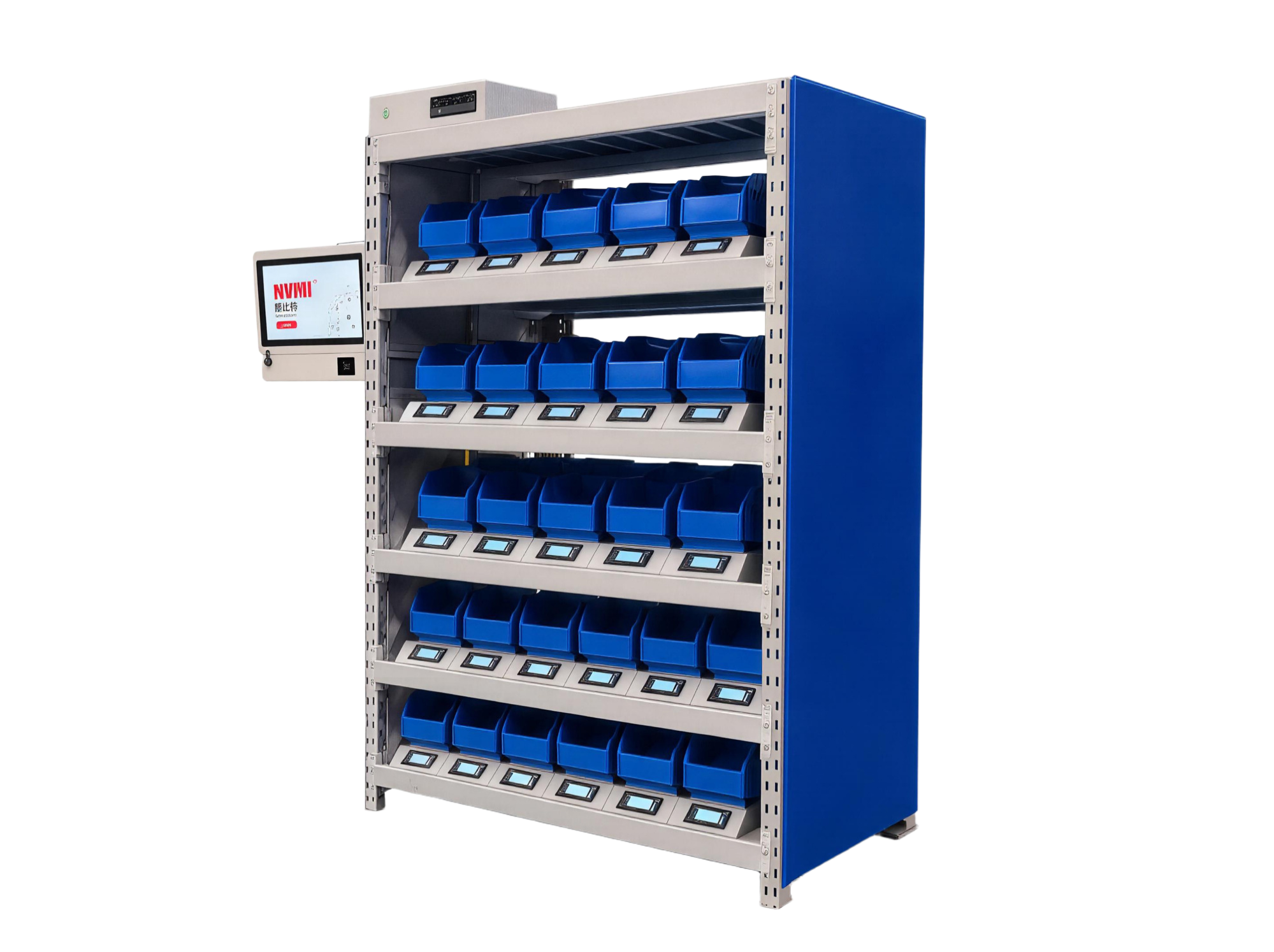
Why Target Customers Need an Open Fastener Smart Cabinet
For factory managers, procurement managers, warehouse supervisors, and production planners, fasteners may seem low-value individually, but they can create high management pressure when quantities, specifications, and usage locations are not visible. A missing fastener can delay assembly, interrupt maintenance, or force employees to search across multiple storage areas. An open fastener smart cabinet helps solve this issue by combining convenient self-pickup with digital inventory control.
Unlike a fully locked dispensing cabinet, an open cabinet is designed for faster access in scenarios where production efficiency and frequent material pickup are priorities. Workers can take materials more conveniently, while the system records inventory changes and updates stock data in real time. This makes the cabinet especially suitable for fast-moving standard fasteners used in manufacturing workshops, production lines, maintenance storerooms, and transit warehouses.
Open Fastener Smart Cabinet for High-Frequency Material Pickup
The main target customers for an open fastener smart cabinet are industrial teams that handle large numbers of small components every day. Automotive factories, robotics manufacturers, electronics assembly plants, power equipment producers, machinery workshops, and industrial distributors all face similar challenges: many material types, frequent issue and return activity, and a strong need for accurate inventory visibility.
In these environments, workers do not want to wait for manual approval every time they need standard fasteners. At the same time, managers cannot rely on memory, handwritten forms, or delayed system updates. A smart cabinet provides a better balance. It supports convenient pickup while helping managers understand what was consumed, which item needs replenishment, and whether stock levels are aligned with real production demand.
Reducing Manual Inventory Work and Data Errors
Traditional fastener management often depends on manual counting, spreadsheet updates, and after-the-fact ERP entry. These methods create time gaps between actual consumption and recorded inventory. Once the data becomes inaccurate, procurement teams may buy too much, miss urgent shortages, or keep excess slow-moving stock. Warehouse teams may also spend unnecessary time checking shelves, confirming balances, and correcting records.
An open fastener smart cabinet uses digital inventory management to reduce these repetitive tasks. When inventory data is updated automatically, managers can spend less time checking stock manually and more time improving material flow. This is valuable for B2B industrial customers that want better visibility without adding more warehouse labor or complex operating procedures.
Real-Time Visibility for Procurement and Supply Chain Teams
Procurement managers need reliable consumption data before making purchasing decisions. Without accurate usage records, safety stock settings may be too high or too low. Too much stock increases storage cost and creates stagnant inventory, while too little stock can stop production. A smart cabinet gives procurement teams a more objective basis for replenishment planning.
With real-time inventory visibility, shortage reminders, and stock status monitoring, supply chain teams can identify demand trends more clearly. This supports more stable replenishment and reduces the risk of emergency purchasing. For industrial distributors, the same data can also support vendor-managed inventory programs, helping customers maintain fastener availability while improving service efficiency.
Improving Production Line Material Flow
Production line managers care about speed, accuracy, and continuity. If workers leave their stations to search for fasteners, the hidden cost is not only walking time but also process interruption. By placing an open fastener smart cabinet near the point of use, factories can make common fasteners available closer to the workstation.
This approach is useful for assembly lines, maintenance teams, repair areas, and tool rooms where the same types of materials are repeatedly used. The cabinet helps standardize the pickup process, improve material location management, and reduce confusion caused by mixed bins or unclear labels. Digital item information also makes it easier for employees to confirm the correct specification before use.
Target Customers That Benefit Most
The best-fit customers for an open fastener smart cabinet are manufacturers with frequent small-part consumption, multiple fastener specifications, and a need for better inventory accuracy. Factory managers benefit from smoother operations. Warehouse managers benefit from fewer manual checks. Procurement managers benefit from clearer demand data. Production planners benefit from fewer material-related interruptions. Industrial distributors benefit from a smarter way to support customer-side inventory programs.
For companies moving toward smart warehouse transformation, an open fastener smart cabinet can be an accessible first step. It does not require a complete warehouse redesign. Instead, it can be deployed around existing material flow, production areas, or warehouse zones where fastener consumption is active. The solution can also support broader intelligent material management when connected with smart bins, smart labels, and digital replenishment workflows.
How an Open Cabinet Supports Digital Inventory Control
A practical open cabinet solution should do more than store fasteners. It should help managers monitor stock levels, record usage, support replenishment reminders, and provide data for analysis. This is where NVMI smart cabinet technology becomes relevant for industrial customers seeking a connected material management system rather than a simple storage rack.
By combining smart units, digital display functions, real-time stock tracking, and system-based replenishment logic, the cabinet helps transform fastener storage into a data-driven process. Managers can review inventory status, identify abnormal usage, and support continuous improvement in material management. Over time, this creates a more transparent connection between warehouse supply, production consumption, and purchasing decisions.
Choosing the Right Open Fastener Smart Cabinet
When selecting an open fastener smart cabinet, customers should consider the type of fasteners being stored, pickup frequency, workstation layout, replenishment responsibility, and integration needs. A production line may require fast access and clear item identification, while a central warehouse may focus more on inventory accuracy and replenishment planning. A distributor-managed model may require stronger data sharing between supplier and customer.
The right cabinet should be easy for workers to use and useful for managers to analyze. If the system is too complicated, adoption will be difficult. If the cabinet only improves storage but does not improve data, the business value will be limited. For this reason, the best solution is one that connects physical material access with digital inventory records, shortage alerts, and practical management visibility.
For customers in manufacturing, logistics, maintenance, and industrial distribution, the open fastener smart cabinet is not just a storage device. It is a tool for improving material flow, reducing manual workload, supporting smarter replenishment, and building a more reliable digital inventory control process.