Frequently Asked Questions About Open Smart Cabinets
Open smart cabinet technology helps manufacturers manage frequently used fasteners, MRO supplies, production consumables, and personal protective equipment with faster access and real-time inventory visibility. Unlike traditional shelves that depend on manual stock checks, an open smart cabinet combines accessible storage with sensing technology and digital inventory management.
For factory managers, warehouse supervisors, procurement teams, and production planners, the main advantage is balance. Workers can collect materials quickly, while the management system continues to monitor stock changes, consumption activity, and replenishment needs. The following questions explain how an open smart cabinet works and where it can create the most value.
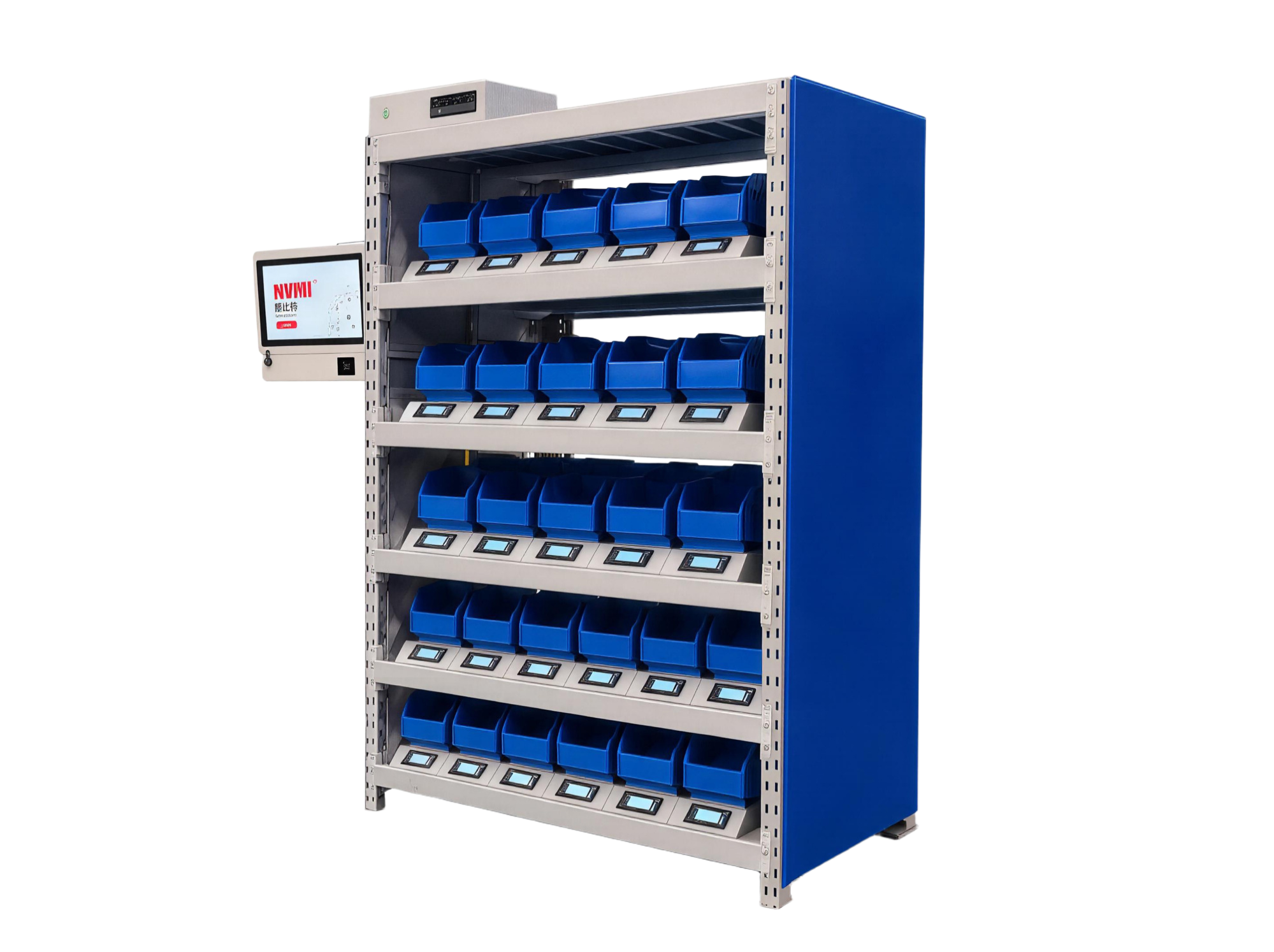
What Is an Open Smart Cabinet?
An open smart cabinet is an intelligent industrial storage system designed for quick and convenient material pickup. It usually contains multiple smart bins or sensing units that hold fasteners, maintenance parts, PPE, tools, and other frequently used supplies.
Unlike a closed vending cabinet, an open model does not require employees to unlock a door before every pickup. Workers can access materials directly, making it suitable for high-frequency production environments where speed is important.
The cabinet can use gravity sensing or other inventory detection technology to identify changes in stock quantity. When materials are removed or replenished, the system updates the inventory record automatically. This reduces dependence on handwritten forms, spreadsheet updates, and delayed ERP entries.
How Does an Open Smart Cabinet Track Inventory?
The cabinet tracks inventory through connected smart units installed beneath or around each storage container. These units detect changes in material weight and send updated information to the inventory management platform.
When an employee removes a quantity of screws, bolts, washers, gloves, or other supplies, the system records the stock reduction. When a warehouse employee or supplier adds materials, the available inventory is updated again.
This process supports real-time inventory visibility without requiring employees to count every item manually. Managers can review stock status through the software platform and identify which materials are available, running low, or waiting for replenishment.
Which Materials Are Suitable for an Open Smart Cabinet?
Open smart cabinets are best suited to frequently used materials that require fast access but do not always need strict employee-level authorization.
Common applications include bolts, nuts, screws, washers, rivets, clips, cable ties, fittings, cutting discs, drill bits, adhesives, packaging supplies, cleaning materials, gloves, masks, ear protection, and safety glasses.
The cabinet can also support spare parts and MRO inventory control in maintenance storerooms. The most suitable materials are normally standardized, repeatedly consumed, easy to store in bins, and important to daily production continuity.
High-value, dangerous, restricted, or highly sensitive materials may be more suitable for a closed smart cabinet with electronic locks and identity verification.
Why Is an Open Smart Cabinet Useful for Fastener Inventory?
Fasteners are often low in unit value but high in operational importance. A production line may use many different specifications of bolts, screws, nuts, and washers. When one essential specification is unavailable, assembly or maintenance work can be delayed.
Traditional fastener inventory management often creates three problems. Workers may take materials without recording the quantity, warehouse records may not match physical stock, and procurement teams may discover shortages too late.
An open smart cabinet improves smart fastener inventory management by recording changes automatically. Each bin can be assigned to a specific material code, description, and specification. This makes it easier for workers to locate the correct item and for managers to monitor actual consumption.
Real usage data also helps procurement teams make better replenishment decisions. Instead of purchasing based only on estimates, they can review how quickly each fastener is being consumed.
Can an Open Smart Cabinet Be Used for PPE?
Yes. An open smart cabinet can be used for frequently consumed PPE in supervised or controlled production areas. Typical materials include disposable gloves, masks, earplugs, safety glasses, protective sleeves, and basic cleaning supplies.
The open design allows employees to collect essential protective equipment without waiting for a warehouse clerk. This is especially helpful in facilities with multiple shifts, large workshops, or production areas located far from the main storeroom.
However, not every type of PPE should be stored openly. Specialized respirators, expensive protective equipment, department-restricted items, or products requiring detailed employee-level issue records may be better managed in a closed dispensing cabinet.
A factory can therefore use open and closed cabinets together. Open cabinets support high-frequency general PPE, while closed cabinets provide stronger access control for restricted items.
How Does an Open Smart Cabinet Reduce Manual Work?
Traditional material management requires employees to issue supplies, update records, count stock, compare physical quantities with system data, and prepare replenishment requests. These tasks consume time and may still produce inaccurate results.
An open smart cabinet automates several parts of this process. Inventory changes are uploaded to the system, stock levels can be monitored remotely, and shortage reminders can be generated when materials fall below a preset level.
This allows warehouse teams to spend less time on repetitive counting and recordkeeping. Production workers also avoid unnecessary waiting at a service counter. The result is a more efficient material pickup process and a lower administrative workload.
Does an Open Smart Cabinet Support Automatic Replenishment?
An open smart cabinet can support smart replenishment by monitoring the available quantity of each stored material. When stock falls below the minimum level configured in the system, the platform can generate a shortage alert or replenishment reminder.
The alert can help internal warehouse teams, procurement personnel, or approved suppliers prepare the next delivery. This creates a more responsive replenishment process based on actual material consumption.
Automatic shortage monitoring is especially valuable for fast-moving materials. It reduces the risk of emergency purchasing, excessive safety stock, and production disruption caused by missing consumables.
Where Should an Open Smart Cabinet Be Installed?
The cabinet should be installed close to the point of use. Suitable locations include assembly lines, maintenance workshops, production cells, transit warehouses, tool rooms, and factory material distribution areas.
Placing the cabinet near workers reduces walking distance and material pickup time. High-frequency materials can be stored beside the production process, while slower-moving items remain in the central warehouse.
The deployment should also consider material consumption, available floor space, power and network access, replenishment routes, and the number of employees using the cabinet.
Flexible deployment allows the factory to adjust the storage layout as production requirements change. This is useful for manufacturers with changing assembly lines, new projects, or seasonal material demand.
How Is an Open Smart Cabinet Different from a Traditional Shelf?
A traditional shelf provides storage but usually does not provide accurate digital inventory data. Employees can remove or return materials without creating an immediate system record. As a result, the listed quantity may differ from the physical quantity.
An open smart cabinet adds inventory sensing, digital records, visual material information, and shortage monitoring. It turns a storage location into a connected material management point.
The difference is not only the cabinet hardware. The main value comes from integrating storage with software, inventory data, and replenishment processes. The NVMI solution combines smart units with a digital management platform to improve visibility across material pickup, inventory monitoring, and replenishment.
What Are the Main Benefits of an Open Smart Cabinet?
The first benefit is faster material access. Employees can collect frequently used supplies without waiting for manual service.
The second benefit is more accurate inventory information. Automatic stock updates reduce the gap between physical inventory and system records.
The third benefit is better shortage prevention. Managers can identify low-stock materials earlier and organize replenishment before production is affected.
The fourth benefit is improved material planning. Consumption records help procurement and warehouse teams understand which materials move quickly and which remain unused.
The fifth benefit is easier digital warehouse transformation. Factories can begin with high-consumption materials and gradually expand the system to additional departments, production lines, and storage areas.
How Should a Factory Select an Open Smart Cabinet Solution?
Factories should begin by analyzing their material categories and operational requirements. Important factors include item size, weight, consumption frequency, storage quantity, replenishment frequency, and the required level of access control.
The selected solution should support suitable bin sizes, reliable sensing, clear material identification, network connectivity, real-time inventory updates, shortage reminders, and software reporting.
It is also important to decide how the cabinet will connect with the existing warehouse and procurement process. A successful project should define who replenishes the cabinet, who monitors alerts, how minimum stock levels are set, and how consumption data will be reviewed.
Is an Open Smart Cabinet a Good Starting Point for Digital Inventory Management?
For many manufacturers, an open smart cabinet is a practical starting point because it addresses a visible operational problem without making material pickup complicated.
Factories can first deploy the system for frequently used fasteners, PPE, and MRO supplies. Once the system begins collecting reliable consumption data, managers can improve stock levels, cabinet locations, replenishment rules, and supplier coordination.
By combining quick access with real-time stock tracking, an open smart cabinet helps manufacturers move from manual material control to a more responsive and data-driven inventory system. It supports production continuity, reduces unnecessary administrative work, and gives decision makers better visibility into factory material flow.