Open vs enclosed vs mobile smart cabinet selection should begin with the material flow, not with the appearance of the equipment. Manufacturing plants often manage several very different inventory scenarios at the same time: high-frequency fasteners near production lines, controlled MRO materials in maintenance areas, tools that require user accountability, and components that need to move as workstations or production layouts change. One cabinet architecture is unlikely to fit every requirement equally well.
The practical choice comes down to access speed, security, traceability, mobility, SKU characteristics, storage capacity, replenishment workflow, and the physical location where materials are consumed. An open smart cabinet prioritizes convenient pickup and inventory visibility. An enclosed smart cabinet adds stronger authorization and physical control. A mobile smart bin brings inventory closer to changing workstations and line-side requirements. All three can be part of the same digital material-management strategy when deployed according to the actual use case.
Open vs Enclosed vs Mobile Smart Cabinet: How to Select the Right Architecture
Quick Answer
Choose an open smart cabinet when authorized workers need fast access to frequently consumed materials and the main requirement is real-time inventory visibility rather than locking every pickup. Choose a closed smart cabinet when the material requires physical containment, user authentication, access records, or stronger traceability. Choose a mobile smart bin when the storage point itself needs to move with production, changing workstations, or flexible manufacturing layouts.
The decision should not be based on security alone. Manufacturers should also evaluate the number of SKUs, dimensions and weight of the items, typical pickup quantity, pickup frequency, user count, available floor space, material criticality, replenishment responsibility, and whether inventory needs to remain fixed or move closer to the point of use.
Key Takeaways
-
Open smart cabinets prioritize convenient material pickup and real-time inventory tracking.
-
Enclosed smart cabinets add physical containment, user permissions, and transaction monitoring.
-
Mobile smart bins support changing production layouts and point-of-use material delivery.
-
NVMI-H is an open-access 50-unit configuration for warehouse, production-line, and transit material management.
-
NVMI-D is an enclosed 30-unit configuration designed for stronger access control and traceability.
-
NVMI-X is a mobile 50-unit configuration designed to adapt to changing production requirements.
-
SKU size, weight, access requirements, user behavior, and replenishment workflow should determine cabinet selection.
-
A manufacturing plant can use more than one cabinet architecture within the same material-management system.
Table of Contents
-
Start with the material flow
-
When an open smart cabinet fits
-
When an enclosed smart cabinet fits
-
When a mobile smart bin fits
-
Compare the three architectures
-
Match cabinet type to material type
-
Consider floor space and location
-
Connect cabinet choice with replenishment
-
When a mixed architecture makes sense
-
Use a practical selection checklist
-
Frequently asked questions
Open vs Enclosed vs Mobile Smart Cabinet Starts with Material Flow
The first selection question should be: where does the material need to be when a worker needs it? A cabinet installed in the wrong location can create unnecessary movement even if the inventory technology works correctly.
For example, high-frequency fasteners used continuously on a production line may benefit from being positioned close to the operator. A maintenance tool that is used less frequently may be better stored in a controlled maintenance area. Materials supporting several changing workstations may require a mobile inventory point rather than a fixed cabinet.
The second question is how the material should be accessed. Some components can be collected quickly by authorized personnel without individual authentication. Other items need an electronic lock, user identification, or transaction records. These requirements determine whether open or enclosed storage is more appropriate.
The third question is how the inventory will be replenished. A digital cabinet should not only hold material. It should support a defined process for detecting low inventory, generating shortage information, and recording the next refill.
When an Open Smart Cabinet Is the Better Fit
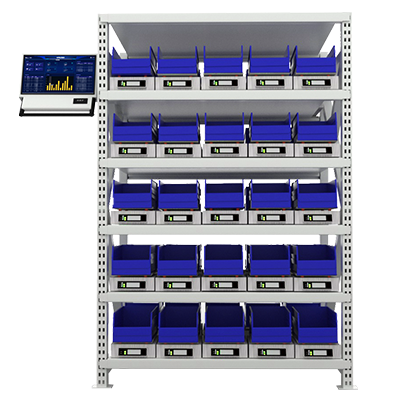
An open smart cabinet is useful when rapid pickup is a priority. Workers can access materials directly without opening a secured cabinet door for every transaction. This can be particularly relevant for fasteners, C-parts, small components, and other high-frequency materials that are repeatedly collected during production.
The NVMI-H configuration is designed around this open-access model. Product documentation identifies it as a 50-unit configuration and describes real-time recording of material retrieval and real-time inventory updates. The documented application scenarios include warehouse material management, production-line material management, and transit inventory.
For manufacturers, the operating advantage is not simply that the cabinet is open. The important difference is that physical pickup can remain convenient while the digital system maintains visibility into the inventory position.
An open architecture can be considered when:
-
Materials are collected many times during a shift.
-
Workers need variable quantities rather than one controlled item per transaction.
-
The material is already available to an authorized production or warehouse group.
-
Inventory visibility is more important than locking each individual withdrawal.
-
Fast access is important to the production process.
-
The storage point is located in a controlled factory environment.
More information about this configuration is available on the NVMI-H open smart inventory page.
When an Enclosed Smart Cabinet Is the Better Fit
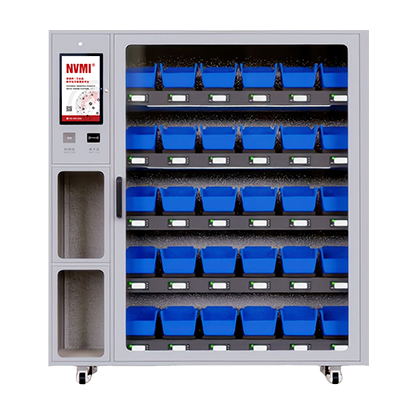
An enclosed smart cabinet adds a physical security layer around the material. This is relevant when a manufacturer needs to restrict access, identify users, retain transaction records, or reduce uncontrolled material movement.
NVMI-D is documented as an enclosed 30-unit configuration. Its architecture includes electronic cabinet control and authentication options. The product documentation describes access methods including password, QR-based identification, facial recognition, fingerprint, and ID card options, depending on project configuration. Monitoring records can also support traceability of access behavior.
An enclosed architecture can fit materials such as selected MRO supplies, tools, higher-value components, restricted consumables, or quality-sensitive materials where the organization wants to know who accessed the cabinet and when.
A closed smart cabinet can be considered when:
-
Only specific employees should access the material.
-
Access must be controlled outside normal storeroom hours.
-
The company needs transaction or user records.
-
Material value or criticality justifies stronger physical control.
-
The storage environment requires protection against uncontrolled access.
-
Traceability is an important part of the operating process.
The NVMI-D enclosed smart inventory page provides the relevant model information for controlled-access applications.
When a Mobile Smart Bin Is the Better Fit
A fixed cabinet assumes that the material location should remain fixed. That is not always true in modern production environments. Workstations can change, products can move through different assembly stages, temporary projects can require different materials, and line-side inventory can need to follow production demand.
NVMI-X is documented as a mobile 50-unit configuration. The design is intended to adapt to changing production processes and can be moved according to workstation requirements. The product documentation also describes real-time inventory synchronization using sensing technology.
A mobile smart bin can be considered when:
-
Production workstations change frequently.
-
Materials need to be delivered closer to a temporary work area.
-
The factory uses flexible or reconfigurable production layouts.
-
Operators currently travel significant distances to obtain materials.
-
A fixed cabinet would create unnecessary material-handling routes.
-
The plant wants inventory to move with the process rather than forcing the process to move to the inventory.
Manufacturers evaluating this approach can review the NVMI-X mobile smart inventory configuration.
Open, Enclosed and Mobile Smart Cabinet Comparison
|
Decision Area
|
NVMI-H Open
|
NVMI-D Enclosed
|
NVMI-X Mobile
|
|
Primary workflow
|
Fast material pickup
|
Controlled material access
|
Flexible point-of-use inventory
|
|
Documented unit count
|
50 smart units
|
30 smart units
|
50 smart units
|
|
Physical access
|
Open
|
Enclosed
|
Mobile inventory architecture
|
|
User authorization
|
Not the primary access model
|
Multiple authentication options
|
Depends on confirmed project configuration
|
|
Real-time inventory
|
Supported
|
Supported as part of the smart inventory workflow
|
Real-time inventory synchronization documented
|
|
Typical scenario
|
Warehouse and production-line consumables
|
Controlled MRO, tools and restricted materials
|
Changing line-side or workstation requirements
|
|
Best selection driver
|
Pickup speed
|
Security and traceability
|
Mobility and production flexibility
|
The model names should not replace project engineering. Actual SKU dimensions, stored quantities, unit loading, user requirements, cabinet placement, and system configuration should be confirmed before deployment.
Match the Industrial Inventory Cabinet to the Material Type
A useful selection process groups materials according to their behavior rather than attempting to classify every SKU individually from the beginning.
Fasteners and C-parts: These materials often have high pickup frequency and relatively simple access requirements. Open smart inventory can be suitable when rapid collection and inventory visibility are the primary goals.
MRO consumables: These can require either open or enclosed storage. Frequently used standard consumables may fit open access, while higher-value or restricted MRO items may justify an enclosed architecture.
Tools: Tools often require accountability, especially when they are expected to be returned. Enclosed smart inventory can provide stronger access control and transaction records where required.
Line-side components: High-frequency production materials can benefit from inventory positioned close to use. Open or mobile configurations can be evaluated according to whether the workstation remains fixed.
Changing project materials: When the required storage position changes regularly, mobile inventory can be more practical than repeatedly relocating conventional shelves or forcing users to return to a central storeroom.
Floor Space and Cabinet Location Should Influence the Decision
An industrial inventory cabinet project should be planned around the real factory layout. A cabinet that technically holds the required materials can still be a poor deployment if it blocks movement, sits too far from consumption, or creates a difficult replenishment route.
Before selecting the equipment, map:
-
Current storage locations
-
Production workstations
-
Worker travel routes
-
Material replenishment routes
-
Available floor space
-
Electrical and network requirements
-
Forklift, AGV, and pedestrian traffic
-
Emergency or restricted-access zones
Open inventory can be effective close to frequently used production areas. Enclosed inventory may be placed where controlled access is needed. Mobile units can reduce the need to commit permanently to one point when the production process is expected to change.
Cabinet Selection Should Support the Replenishment Workflow
Whichever architecture is selected, the inventory should connect to a clear replenishment process. The NVMI intelligent material-management approach combines smart inventory hardware with SaaS-based inventory information. The product documentation describes real-time inventory monitoring, material usage records, shortage reminders, and supplier replenishment records.
This matters because a cabinet should not become another isolated storage point. When material is consumed, the inventory position should be available for the next decision. When a configured inventory condition is reached, shortage information can support internal or supplier replenishment.
For example, an open cabinet holding high-frequency fasteners may need frequent replenishment based on actual consumption. An enclosed cabinet holding controlled tools may have a lower transaction frequency but require detailed access records. A mobile unit may need replenishment coordinated with its current workstation location.
The physical architecture and the digital workflow should therefore be designed together.
When a Mixed Smart Cabinet Architecture Makes Sense
Manufacturers do not need to choose one cabinet architecture for the entire plant. A mixed deployment can often reflect the real diversity of industrial materials more accurately.
A production facility might use open NVMI-H units for fasteners and consumables near assembly areas, enclosed NVMI-D units for controlled MRO materials in maintenance zones, and NVMI-X mobile inventory for workstations that change with production schedules.
This approach can create a common digital material-management framework while allowing the physical access model to match each use case.
The main requirement is consistent data governance. SKU definitions, inventory transactions, shortage logic, replenishment responsibilities, and user permissions should remain clear across the different cabinet types.
Selection Mistakes to Avoid
-
Choosing only by cabinet capacity: More storage units do not automatically make a cabinet more suitable.
-
Locking every low-value item: Excessive access control can slow high-frequency production pickup.
-
Using open access for restricted materials: Convenience should not override required security and traceability.
-
Ignoring mobility: A fixed cabinet can create unnecessary travel when workstations frequently change.
-
Ignoring item dimensions: SKU count alone does not determine whether materials physically fit the selected units.
-
Ignoring replenishment: Smart storage without a defined refill process can still experience material shortages.
-
Assuming every configuration is identical: Project-specific hardware, authentication, networking, and integration requirements should be technically confirmed.
Smart Cabinet Selection Checklist
|
Question
|
If Yes, Evaluate
|
|
Do users collect materials very frequently?
|
Open smart cabinet
|
|
Do users need variable quantities of small C-parts?
|
Open smart cabinet
|
|
Must access be restricted to approved users?
|
Enclosed smart cabinet
|
|
Do you need user-level transaction records?
|
Enclosed smart cabinet
|
|
Does the inventory point need to move?
|
Mobile smart bin
|
|
Does the production layout change regularly?
|
Mobile smart bin
|
|
Do different material groups have different control requirements?
|
Mixed architecture
|
|
Is supplier replenishment part of the project?
|
Confirm digital inventory and replenishment workflow across all selected architectures
|
Information to Prepare Before Requesting a Configuration
-
Total candidate SKU count
-
Material categories
-
Item dimensions and weight range
-
Typical quantity stored per SKU
-
Pickup frequency
-
Typical pickup quantity
-
Number of users and shifts
-
Required access-control level
-
Traceability requirements
-
Available floor space
-
Current production and warehouse layout
-
Mobility requirements
-
Current replenishment workflow
-
Supplier participation
-
Required system-integration scope
-
Target inventory and operational KPIs
Image and Diagram Suggestions
-
Three-model comparison diagram: Show open, enclosed, and mobile cabinet architectures side by side. ALT text: "Open vs enclosed vs mobile smart cabinet selection framework for industrial inventory."
-
Material decision matrix: Map fasteners, C-parts, tools, MRO consumables, and line-side components to different cabinet architectures. ALT text: "Industrial inventory cabinet selection by material type and access requirement."
-
Material-flow layout: Show fixed warehouse inventory, line-side open inventory, controlled maintenance storage, and mobile workstation inventory. ALT text: "Smart cabinet placement for warehouse production line and mobile material flow."
-
Replenishment diagram: Show pickup, inventory update, shortage detection, replenishment, and refill confirmation. ALT text: "NVMI smart cabinet inventory and replenishment workflow."
Which Smart Cabinet Is Best for Fasteners and C-Parts?
An open smart cabinet can be a practical choice for frequently consumed fasteners and C-parts when rapid pickup and real-time inventory visibility are more important than authenticating every individual withdrawal. The final configuration should still consider SKU dimensions, weight, user environment, and replenishment requirements.
When Should I Choose an Enclosed Smart Cabinet?
Choose an enclosed architecture when the project requires physical containment, user authorization, stronger transaction traceability, or controlled access to tools, higher-value materials, or restricted consumables.
When Does a Mobile Smart Bin Make Sense?
Mobile inventory is useful when production layouts change, workstations move, or materials need to be positioned close to temporary points of use. It can reduce dependence on one permanent storage location.
Can One Factory Use Open, Enclosed and Mobile Cabinets Together?
Yes. Different material groups can use different physical architectures while remaining part of a coordinated digital inventory-management process. The plant should maintain consistent SKU, transaction, inventory, and replenishment rules.
Should Cabinet Selection Be Based on SKU Count Alone?
No. SKU count is only one input. Item dimensions, weight, quantity per SKU, access control, pickup frequency, available floor space, mobility, and replenishment requirements can all affect the correct configuration.
Can Smart Cabinets Support Supplier Replenishment?
The NVMI material-management architecture includes inventory status, shortage information, and replenishment records that can support a supplier or internal replenishment workflow. The exact responsibility, integration, and technical configuration should be confirmed for each project.
References & Sources
-
Bear Bit NVMI product documentation: NVMI-H open-access configuration, NVMI-D enclosed controlled-access configuration, and NVMI-X mobile configuration.
-
Bear Bit NVMI material-management documentation: real-time inventory monitoring, material usage records, shortage reminders, replenishment records, and SaaS-based inventory visibility.
-
Project-specific unit configuration, access methods, system integration, layout, and capacity should be technically confirmed before deployment.
Conclusion: Select the Smart Cabinet Architecture Around the Real Material Process
Open vs enclosed vs mobile smart cabinet selection is not about choosing the most complex equipment. It is about matching access, inventory visibility, security, mobility, and replenishment to the way materials are actually used.
Open NVMI-H inventory can support rapid pickup of frequently consumed materials. Enclosed NVMI-D inventory can provide stronger access control and traceability. Mobile NVMI-X inventory can support flexible production environments where the material point needs to move with the workflow.
For many manufacturers, the correct answer is a combination of these architectures rather than one cabinet type across the entire site. A specification-driven evaluation should begin with your SKU count, material categories, item size and weight range, current workflow, user count, required access control, floor-space constraints, mobility needs, integration scope, deployment locations, replenishment responsibilities, and target KPIs. These inputs provide the foundation for selecting an industrial smart inventory architecture that fits the actual factory material flow.