Real-Time Inventory Tracking for Manufacturing Plants
Real-time inventory tracking for manufacturing plants gives managers an accurate, continuously updated view of materials, components, tools, fasteners, and MRO supplies. Instead of relying on handwritten records, delayed ERP entries, or periodic stock counts, manufacturers can use connected hardware and inventory software to monitor material movement as it happens.
This visibility is increasingly important in factories where production depends on thousands of frequently used items. A missing fastener, maintenance component, electrical part, or cutting tool can interrupt production even when the item has a relatively low purchase value. Real-time tracking helps manufacturers identify shortages earlier, control material access, improve replenishment, and reduce the gap between recorded inventory and physical stock.
Why Traditional Inventory Methods Create Manufacturing Risks
Many manufacturing plants still manage indirect materials through spreadsheets, paper forms, manual counting, or basic warehouse transactions. These methods may appear simple, but they often create delays between the physical movement of materials and the update of inventory records.
For example, an employee may take a box of fasteners from a storage area but forget to record the transaction. A maintenance technician may collect a spare part during a night shift when no warehouse employee is available. Production workers may move materials between workstations without updating the system. Over time, the inventory record no longer matches the actual quantity available.
This lack of accuracy can lead to emergency purchases, duplicate orders, excessive safety stock, delayed maintenance, and unexpected production shortages. It also makes inventory planning more difficult because procurement teams cannot confidently use historical consumption data.
How Real-Time Inventory Tracking Works
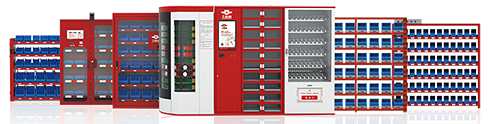
A real-time inventory system combines connected storage equipment, identification technology, inventory software, and automated data collection. Materials are stored in monitored locations such as smart cabinets, smart bins, or controlled dispensing units. When an authorized employee retrieves or returns an item, the system records the transaction and updates the available quantity.
Depending on the application, the system may use gravity sensing, electronic labels, barcode scanning, RFID, access cards, QR codes, or user authentication. The objective is not simply to collect more data. It is to reduce manual entry and ensure that inventory information reflects actual material movement.
An intelligent material management platform can display current stock, material descriptions, item codes, consumption history, user activity, and replenishment status. Managers can review this information remotely instead of visiting every storage point or waiting for a scheduled inventory count.
Real-Time Inventory Tracking for Manufacturing Plants Improves Stock Accuracy
The main advantage of real-time inventory tracking for manufacturing plants is improved stock accuracy. When material withdrawals and replenishment activities are recorded automatically, there are fewer opportunities for missed entries, transcription errors, or delayed updates.
Accurate inventory data allows production planners to confirm whether required materials are available before releasing work orders. Procurement teams can make purchasing decisions based on actual consumption instead of estimates. Warehouse managers can identify unusual usage patterns and investigate discrepancies before they become larger problems.
Real-time data also supports more reliable safety stock settings. Without accurate consumption information, factories often compensate by purchasing additional inventory. This may reduce the immediate risk of shortages, but it increases storage requirements and can create slow-moving or obsolete stock. Better tracking enables a more balanced approach to inventory control.
Preventing Material Shortages with Smart Replenishment
Real-time inventory visibility becomes more valuable when it is connected to a smart replenishment process. Each item can be assigned a minimum stock level based on its usage frequency, lead time, and operational importance. When the available quantity falls below this level, the system can generate a shortage alert or replenishment request.
This process helps procurement teams and suppliers respond before production is affected. Instead of checking every bin manually, replenishment personnel can focus on items that require attention. The system can also provide consumption history that supports more accurate order quantities.
For vendor-managed inventory programs, authorized suppliers can use shared inventory information to plan replenishment more efficiently. This improves coordination between the manufacturing plant, internal warehouse teams, and industrial distributors while reducing dependence on emails, phone calls, and manual stock reports.
Controlled Material Dispensing and Employee Traceability
Some manufacturing materials require more control than open shelving can provide. High-value tools, critical spare parts, calibrated equipment, safety supplies, and sensitive components may need restricted access. A controlled smart cabinet allows employees to identify themselves before opening the cabinet or retrieving materials.
The system can record who accessed the cabinet, when the transaction occurred, which item was taken, and how much inventory remained. This creates a traceable material issue and return process without requiring a warehouse employee to supervise every transaction.
Controlled dispensing does not need to slow down production. Employees can receive permission-based, 24/7 access to approved materials while managers maintain visibility over usage. This is especially useful for multi-shift factories, maintenance departments, remote production areas, and facilities with decentralized material storage.
Using Smart Cabinets at the Point of Use
Central warehouses are important, but they are not always the most efficient location for frequently used materials. Workers may spend unnecessary time walking to the storeroom, waiting for assistance, completing forms, and returning to the production line. Point-of-use inventory places materials closer to the workstation where they are consumed.
Smart cabinets can be deployed beside assembly lines, maintenance workshops, production cells, quality departments, or equipment service areas. A connected cabinet provides local availability while maintaining centralized inventory visibility.
Solutions from NVMI can support real-time stock updates, access management, shortage reminders, and digital material records. Open smart cabinet configurations are suitable for fast and convenient material pickup, while enclosed models can provide stronger access control for sensitive or higher-value inventory.
Manufacturing Applications for Intelligent Inventory Control
Real-time inventory tracking can support many industrial environments. Automotive plants can use smart storage systems for assembly fasteners, maintenance supplies, and production tools. Electronics manufacturers can manage components, consumables, and line-side materials. Robotics companies can improve access to precision parts and technical supplies.
Power equipment manufacturers, valve producers, machinery factories, and energy storage facilities can use the same approach to monitor spare parts and MRO inventory. Maintenance departments can provide technicians with around-the-clock access to approved items while keeping a complete digital record of withdrawals and returns.
The technology is also useful for industrial distributors that manage customer inventory. Instead of waiting for customers to submit replenishment requests, distributors can use current inventory and consumption data to improve service planning.
Key Features to Evaluate Before Implementation
Manufacturers should begin by identifying the materials, users, and processes that need better visibility. The selected system should support the sizes and weights of the items being stored and should provide an appropriate level of access control.
Important capabilities include automatic inventory updates, shortage alerts, user identification, transaction history, material location guidance, remote monitoring, data export, and multilingual operation. Plants should also evaluate network connectivity, software scalability, cabinet expansion, and integration requirements.
Implementation does not need to cover the entire factory immediately. Many companies begin with a high-impact area such as maintenance supplies, fastener inventory, production-line consumables, or critical spare parts. After the process is validated, additional cabinets and material categories can be added.
Building a More Visible and Efficient Material Flow
Real-time inventory tracking is more than a warehouse technology. It connects procurement, production, maintenance, suppliers, and material users through shared operational data. By replacing delayed manual records with automated inventory updates, manufacturers can improve stock accuracy, support timely replenishment, reduce unnecessary handling, and respond to shortages earlier.
For factories planning a smart warehouse transformation, intelligent cabinets and connected bins offer a practical starting point. They bring digital inventory control directly to the location where materials are stored and consumed. The result is a more traceable, responsive, and efficient material management process across the manufacturing operation.