NVMI data requirements determine whether a Vendor Managed Inventory program becomes a reliable replenishment process or simply another dashboard with incomplete information. A supplier cannot manage inventory effectively if it does not know exactly which material is being consumed, where the stock is located, how much remains available, what replenishment rule applies, and whether another shipment is already on the way.
For industrial manufacturers managing fasteners, C-parts, MRO supplies, tools, and line-side materials, good NVMI data does not mean collecting every possible data field. It means creating a trusted information flow that connects physical material movement with inventory status, consumption history, replenishment decisions, and supplier response.
NVMI Data Requirements: What Information Does the Supplier Actually Need?
Quick Answer
At a minimum, a practical NVMI program needs accurate material identification, storage-location information, current inventory, consumption or material-issue data, agreed replenishment parameters, supplier responsibility, and visibility into replenishment already in progress. Depending on the operating model, additional information such as demand forecasts, lead-time assumptions, returns, ownership status, user information, and transaction history can improve planning and control.
The important principle is that data must support a decision. Current stock tells the supplier what is available. Inventory consumption data explains how material is moving. Minimum, maximum, target, or other replenishment parameters indicate when action may be required. Open replenishment data prevents duplicated responses. Together, these data objects create the information loop required for supplier-managed replenishment.
Key Takeaways
-
A NVMI program needs more than a periodic inventory balance.
-
Material master data, location data, current stock, consumption transactions, and replenishment rules form the basic data foundation.
-
Issue, return, and replenishment transactions should use consistent definitions so buyer and supplier interpret inventory changes the same way.
-
Minimum and maximum levels are common NVMI inputs, but one replenishment formula should not be treated as universally correct.
-
Inventory data should be updated at a frequency appropriate to the material's consumption rate and shortage risk.
-
Open replenishment and inbound information help prevent duplicate orders and incorrect supplier responses.
-
Smart bins and smart cabinets can capture inventory changes and material usage closer to the physical point of consumption.
-
ERP, MES, WMS, SaaS, and supplier systems need clearly defined data ownership when integration is part of the project.
Table of Contents
-
NVMI data must support replenishment decisions
-
Material and location master data
-
Current inventory data
-
Inventory consumption data
-
Replenishment signals and planning parameters
-
Open replenishment and inbound data
-
ERP, MES, WMS and supplier-system responsibilities
-
Data quality and update frequency
-
How smart inventory equipment supports NVMI data
-
NVMI data implementation checklist
-
Frequently asked questions
NVMI Data Is Decision Data, Not Just Inventory Reporting
A common NVMI implementation mistake is to begin by asking, "What data can we send to the supplier?" A better question is, "What decisions does the supplier need to make?"
If the supplier is responsible for maintaining agreed inventory levels, it must know whether stock is healthy, approaching a replenishment condition, already below the required level, or already covered by an incoming replenishment. Each of those decisions requires specific data.
This is why supplier managed inventory data should be designed around the replenishment workflow. The buyer and supplier should first map the process from physical material consumption to replenishment confirmation. Data fields are then assigned to each step.
For example, a basic workflow may be:
-
A user removes material from a storage location.
-
The system records the inventory change or material-issue transaction.
-
The available quantity is updated.
-
The current quantity is evaluated against the agreed replenishment rule.
-
A replenishment condition is generated when required.
-
The supplier reviews the condition and plans a refill.
-
The replenishment is dispatched or otherwise confirmed.
-
Incoming material is recorded when it reaches the agreed inventory location.
Every step creates or depends on data. If one step is missing, the supplier may be making decisions from an incomplete picture.
1. Material Master Data: Define Exactly What Is Being Managed
Reliable NVMI begins with consistent material identification. The same fastener should not be known by one code at the production line, another description in the warehouse, and an unrelated supplier reference with no mapping between them.
Useful material master fields can include:
-
Customer material or SKU number
-
Material description
-
Specification or size
-
Unit of measure
-
Material category
-
Approved supplier
-
Supplier material reference where required
-
Packaging or standard replenishment quantity where relevant
-
Active or inactive status
For fasteners and C-parts, specifications are particularly important because visually similar products may not be interchangeable. Material-code governance should therefore be completed before automatic replenishment logic is activated.
2. Current Inventory: How Much Is Available and Where?
The next essential data object is current inventory. The supplier needs to know not only the total quantity but also the location where the material is available.
A factory may have stock in a central warehouse while a production-line location is nearly empty. A plant-level quantity can therefore look healthy while the location that actually serves production is approaching a shortage.
Useful inventory fields can include:
-
Material or SKU number
-
Plant or site
-
Warehouse or storage area
-
Cabinet, bin, unit, or channel
-
Current available quantity
-
Last inventory update time
-
Inventory status
The required location detail depends on the replenishment model. If the supplier manages stock directly at point-of-use locations, location-level visibility becomes much more important than a single plant-wide total.
3. Inventory Consumption Data: What Is Actually Being Used?
Current inventory shows a position at one moment. Inventory consumption data explains how that position is changing.
For high-frequency materials, historical usage can help the buyer and supplier distinguish between a normal inventory decline and an abnormal consumption pattern. Transaction-level records can also provide a stronger basis for troubleshooting discrepancies.
A useful consumption transaction can contain:
|
Data Field
|
Purpose
|
|
Transaction timestamp
|
Shows when the inventory movement occurred.
|
|
SKU
|
Identifies the material affected.
|
|
Location
|
Identifies where the material was consumed.
|
|
Transaction type
|
Distinguishes issue, return, replenishment, or adjustment.
|
|
Quantity
|
Shows the amount added to or removed from inventory.
|
|
User or department
|
Can support traceability when required by the project.
|
|
Reference
|
Can connect the transaction to another process where supported.
|
Not every NVMI program requires individual-user information. For open-access C-parts, quantity and location may be the most important inputs. For controlled MRO materials, higher-value items, or restricted materials, authentication and issue traceability may become more important.
4. Replenishment Signals: When Should the Supplier Act?
Inventory visibility is useful, but NVMI needs a rule that converts information into action. Replenishment signals tell the supplier when inventory requires attention.
Common inputs can include minimum stock, maximum stock, target inventory, safety stock, reorder conditions, consumption trends, forecast demand, or combinations of these factors. Some NVMI processes use minimum and maximum quantities, while others use days of supply or project-specific replenishment logic.
There is no single universal formula that is correct for every factory. A stable fastener consumed every day may support a relatively simple min-max rule. A component affected by production campaigns, maintenance shutdowns, or irregular projects may require additional demand information and more active exception review.
The buyer and supplier should document:
-
What condition creates a replenishment signal?
-
Who receives the signal?
-
Does it create an automatic task or require supplier review?
-
How is the replenishment quantity determined?
-
How are packaging constraints handled?
-
What happens when consumption suddenly changes?
-
What happens when the supplier cannot meet the normal replenishment plan?
The signal becomes useful only when it is connected to a clearly owned action.
5. Open Replenishment and Inbound Data Prevent Duplicate Decisions
Current inventory alone can produce misleading replenishment decisions if the supplier cannot see material that is already being replenished.
Suppose a location falls below its target level and the supplier dispatches additional material. Before that shipment arrives, the inventory remains below target. If the NVMI process does not record the open replenishment, another planner or automated process may interpret the same low quantity as a new requirement.
A mature data model should therefore consider information such as:
-
Open replenishment quantity
-
Replenishment status
-
Expected or planned arrival
-
Supplier responsible
-
Receiving confirmation
-
Quantity actually replenished
This closes the loop between a shortage signal and the inventory that eventually arrives.
6. Demand and Forecast Data: Useful, but Not Always the Same for Every SKU
Historical consumption is backward-looking. Production plans and forecasts can provide forward-looking context when the supplier needs to anticipate a known change in demand.
For example, a production schedule may indicate that a particular line will increase output, introduce a different product configuration, or stop for maintenance. Current inventory alone may not reveal that upcoming change.
Demand information can therefore be valuable for selected materials, but the NVMI team should define which source is authoritative and how the supplier should use it. A forecast should not silently override actual inventory rules unless the process has been designed to do so.
Stable high-frequency C-parts may require a different level of demand planning than project-specific or highly variable components. Data requirements should follow material behavior.
7. Ownership and Consignment Data When Commercial Models Require It
NVMI does not automatically determine who owns inventory. If a NVMI program is combined with consignment or consumption-based settlement, ownership-related data becomes an additional requirement.
The system may need to distinguish supplier-owned stock, buyer-owned stock, issued material, returned material, or quantities awaiting reconciliation. The exact ownership-transfer event must be defined commercially before it is configured technically.
This is especially important because the physical inventory transaction and the financial transaction may not always occur at the same moment. Procurement, finance, warehouse teams, and the supplier should agree on the definition before implementation.
8. Decide Which System Owns Each NVMI Data Object
Industrial NVMI data may move through several systems. Smart cabinets and bins can capture shop-floor transactions. A SaaS platform can monitor inventory and replenishment information. ERP can manage purchasing and financial records. WMS can manage warehouse stock and movements. MES can provide production-related context. Supplier systems may receive inventory information and return replenishment responses.
The most important architecture question is not which software name appears in the project. It is which system is the source of truth for each data object.
|
Data Object
|
Source-of-Truth Question
|
|
SKU master
|
Which system creates and approves the material identity?
|
|
Point-of-use inventory
|
Which system represents the latest physical quantity?
|
|
Issue and return transaction
|
Where is the original material movement captured?
|
|
Replenishment parameter
|
Who owns and approves min, max, target, or other settings?
|
|
Open replenishment
|
Which system confirms a refill is already planned?
|
|
Supplier responsibility
|
Where is the approved supplier-to-SKU relationship maintained?
|
Where supported by the confirmed project architecture, data can be exchanged with ERP, MES, WMS, and supplier systems through APIs or standard protocols. Interface compatibility, data mapping, authentication, update frequency, and exception handling should be technically verified for each implementation rather than assumed.
For more architecture context, see the smart cabinet industrial material management guide.
9. How Fresh Does NVMI Data Need to Be?
Not every material requires exactly the same data-update frequency. The correct frequency depends on consumption speed, criticality, replenishment lead time, location, and the consequence of a shortage.
A slow-moving maintenance item may tolerate a different update cadence from a high-frequency fastener consumed continuously on an assembly line. The requirement should therefore be defined from the replenishment decision backwards.
Whatever frequency is selected, both parties need to understand the timestamp. A supplier should be able to distinguish a current inventory value from an older value that has not been updated because a device or interface is temporarily offline.
Useful data-quality controls include:
-
Timestamp every relevant inventory record.
-
Monitor missing or delayed updates.
-
Prevent duplicate material codes.
-
Validate storage-location mappings.
-
Separate issues, returns, replenishments, and adjustments.
-
Review repeated physical-versus-system discrepancies.
-
Define how offline transactions are synchronized.
-
Maintain responsibility for replenishment parameters.
How NVMI Supports NVMI Data Collection at the Material Location
The NVMI smart material management approach connects intelligent inventory equipment with SaaS-based data management. The documented system architecture includes commodity information, stock information, pickup information, staff information, replenishment information, and supplier information.
The system also supports real-time inventory monitoring, material usage records, automatic shortage warnings, supplier replenishment records, and visual material-status monitoring. When inventory falls below the minimum safety-stock value configured in the system, shortage information can be generated for replenishment handling.
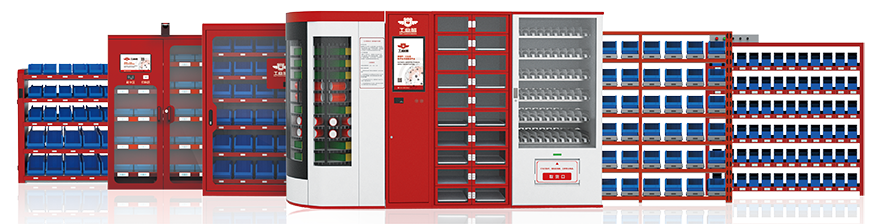
For open-access applications such as frequently used fasteners or line-side materials, the NVMI-H model supports automatic inventory updates as materials are collected. NVMI-D adds enclosed storage, authentication, and monitoring for applications that require tighter control. NVMI-X supports mobile material management for production environments where inventory locations need to adapt to changing workflows.
Current configurations can be reviewed through the NVMI smart inventory product center. Additional inventory-management topics are available in the smart warehouse technology resource center.
NVMI Data Implementation Checklist
-
Define the NVMI scope: Confirm suppliers, plants, storage locations, material categories, and SKUs.
-
Create a shared data dictionary: Define every important field, unit, status, and transaction type.
-
Confirm material-code mapping: Map buyer and supplier references where different codes are used.
-
Define the source of truth: Assign ownership for SKU, stock, consumption, replenishment, and supplier data.
-
Define material events: Agree what counts as issue, return, adjustment, refill, and replenishment confirmation.
-
Set replenishment rules: Define minimum, maximum, safety-stock, target, or other project-specific logic.
-
Define open-order visibility: Ensure planned or in-transit replenishment is visible before another requirement is created.
-
Set update-frequency requirements: Match data freshness to material consumption and shortage risk.
-
Define exception rules: Document actions for abnormal demand, stale data, stock discrepancies, delayed supply, and offline equipment.
-
Confirm integration scope: Identify required ERP, MES, WMS, SaaS, and supplier-system data exchanges.
-
Control permissions: Define which users and suppliers can view or modify each data type.
-
Test with real transactions: Validate issue, return, shortage, replenishment, and reconciliation scenarios before scaling.
What Should Be Tested During a NVMI Pilot?
A NVMI pilot should test data behavior as carefully as the physical equipment. A technically connected system can still produce poor replenishment decisions if its data definitions are wrong.
Useful acceptance scenarios include removing material, returning material, crossing a replenishment threshold, creating an open refill, receiving material, correcting a discrepancy, handling temporary loss of connectivity, and changing an approved replenishment parameter.
The project team should confirm that the resulting inventory position is understood consistently by the warehouse, supplier, procurement team, and any connected enterprise systems.
KPIs can include transaction completeness, inventory-record consistency, replenishment response time, stale-data events, shortage events, exception volume, and the proportion of replenishments requiring manual correction. Targets should be based on the plant's own baseline and project requirements rather than treated as guaranteed product performance.
Image and Diagram Suggestions
-
NVMI data architecture diagram: Show smart bins or cabinets, SaaS, ERP/MES/WMS, supplier system, and replenishment data flow. ALT text: "NVMI data requirements and system architecture for industrial inventory management."
-
Data-object map: Show SKU master, inventory, consumption, replenishment rules, supplier information, and inbound data. ALT text: "Core supplier managed inventory data objects required for NVMI."
-
Replenishment event flow: Illustrate issue, inventory update, threshold detection, supplier response, refill, and confirmation. ALT text: "NVMI replenishment signals from material consumption to supplier refill."
-
Source-of-truth matrix: Compare cabinet, SaaS, ERP, MES, WMS, and supplier-system responsibilities. ALT text: "NVMI implementation data ownership matrix for factory systems."
Frequently Asked Questions
What Is the Minimum Data Required for a NVMI Program?
A practical minimum normally includes reliable material identification, storage location, current inventory, consumption or transaction information, replenishment parameters, responsible supplier, and visibility into replenishment already planned. The exact scope depends on the operating model.
Does a Supplier Need Real-Time Inventory Data for NVMI?
The supplier needs data that is current enough for the replenishment decision. High-frequency or critical materials may benefit from real-time or near-real-time updates, while slower-moving materials may support a different update cadence. The requirement should be defined by consumption and risk.
Does NVMI Require Forecast Data?
Not in every case. Stable repetitive materials can often be managed primarily with current stock, consumption, and replenishment parameters. Forecast or production-demand information becomes more useful when future requirements are expected to differ materially from recent consumption.
Should the Supplier Have Direct Access to the Buyer's ERP?
Not necessarily. Supplier data can be shared through different architectures, including dedicated SaaS platforms, supplier portals, or system-to-system interfaces. Access rights and integration methods should follow the customer's IT and security requirements.
What Happens If Inventory Data Is Wrong?
Incorrect inventory can create incorrect replenishment decisions even when the NVMI logic itself is correct. The project therefore needs discrepancy handling, transaction review, data-quality monitoring, and a defined process for correcting the authoritative inventory record.
Can Smart Cabinets Provide the Data Needed for NVMI?
Smart inventory equipment can provide important point-of-use data such as current inventory, material issues, returns, shortage conditions, user activity where applicable, and replenishment records. The complete NVMI data architecture may still require information from ERP, MES, WMS, suppliers, or other systems depending on the project.
References & Sources
-
Bear Bit NVMI product documentation: product information, stock information, pickup records, staff information, supplier information, replenishment information, real-time inventory monitoring, material usage records, shortage warnings, and replenishment records.
-
SAP Help Portal, Vendor-Managed Inventory: customer stock and sales data are provided to the vendor so the vendor can determine replenishment requirements.
-
SAP Supplier-Managed Inventory documentation: inventory on hand, gross demand, and minimum/maximum inventory conditions can be used in supplier replenishment planning.
-
Bear Bit current product documentation for NVMI-H, NVMI-D, and NVMI-X smart inventory configurations.
-
Actual data fields, replenishment formulas, interfaces, update frequencies, ownership rules, and system responsibilities should be confirmed for each NVMI implementation.
Conclusion: Good NVMI Starts With Trusted Data and Clear Ownership
NVMI data requirements should be designed around the replenishment decisions the supplier is expected to make. Material identity, location, current inventory, consumption history, replenishment parameters, and open inbound activity form the core information loop. Additional demand, ownership, traceability, and integration data should be added when the operating model requires them.
The goal is not to create the largest possible database. It is to make physical inventory changes visible, convert those changes into reliable replenishment signals, and ensure both buyer and supplier know which action comes next.
For a specification-driven NVMI evaluation, prepare your SKU list, material categories, current inventory workflow, monthly usage data, supplier model, user count, access-control requirements, integration scope, deployment locations, and target KPIs. These inputs provide the foundation for defining the data architecture, smart inventory configuration, and supplier replenishment process before a pilot is deployed.