NVMI for C-parts is designed to solve a common manufacturing problem: components such as fasteners, washers, nuts, clips, fittings, and maintenance consumables may have relatively low unit values, yet managing thousands of repeated withdrawals and replenishment decisions can create a large operational burden. When these materials are required every day across production lines, maintenance areas, and warehouses, availability can matter far more than the purchase value of an individual item.
Vendor Managed Inventory changes the way this work is organized. Instead of relying entirely on the buyer to count stock, identify shortages, create replenishment requests, and follow each order, the supplier receives agreed inventory or consumption information and takes responsibility for replenishment according to defined rules. Digital inventory technology can strengthen this process by capturing material movement closer to the point of use and turning physical consumption into usable replenishment data.
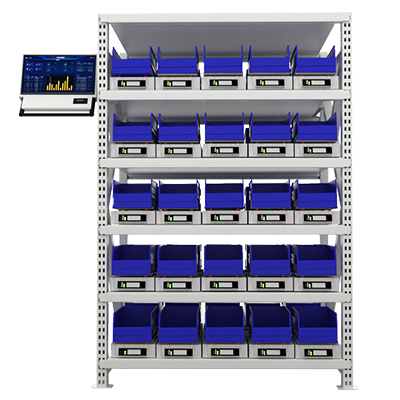
NVMI for C-Parts: From Frequent Consumption to Supplier Replenishment
Quick Answer
For C-parts, NVMI typically works by connecting actual inventory conditions with a structured supplier replenishment process. The manufacturer first defines which materials, storage locations, minimum or target levels, and suppliers are included. Inventory or consumption data is then made visible to the responsible supplier. When an agreed replenishment condition occurs, the supplier plans and performs the refill rather than waiting for the buyer to manually initiate every requirement.
The objective is not simply to put more stock beside the production line. A well-designed NVMI process creates a repeatable information loop: material is consumed, the inventory position changes, the change is recorded, replenishment requirements are identified, the supplier responds, and the replenishment transaction is recorded. This is particularly relevant for low-value components because reducing repetitive administrative work can be just as important as optimizing the physical stock itself.
Key Takeaways
- C-parts can be inexpensive individually but operationally demanding because of large SKU counts, frequent withdrawals, and repeated replenishment activity.
- NVMI shifts agreed replenishment responsibility from the buyer toward the supplier.
- Successful C-parts inventory management depends on reliable material identification, inventory visibility, replenishment rules, and exception handling.
- Fastener NVMI can be applied at warehouses, maintenance storerooms, production lines, and other point-of-use locations.
- Smart bins and smart cabinets can provide digital inventory changes, material issue records, shortage signals, and replenishment information.
- Open, enclosed, and mobile inventory equipment can support different access and production requirements.
- Inventory ownership is separate from NVMI and should be defined contractually if consignment is involved.
- NVMI should be implemented around actual material flow rather than applying one replenishment rule to every SKU.
Table of Contents
- Why C-parts are difficult to manage
- How NVMI works step by step
- What data drives C-parts NVMI
- Buyer and supplier responsibilities
- A practical fastener NVMI workflow
- How smart inventory equipment supports NVMI
- Designing replenishment rules
- Implementation checklist
- What to measure after deployment
- Frequently asked questions
Why Low Value Components Can Create High Management Effort
The challenge with low value components is often not the value of one box of material. The difficulty comes from repetition. A manufacturing facility may use many standardized parts across numerous machines, workstations, maintenance activities, and product configurations. Each SKU can create its own cycle of counting, recording, requesting, ordering, receiving, storing, issuing, and replenishing.
Traditional processes can therefore generate significant administrative activity around materials that receive relatively little individual management attention. Warehouse personnel may conduct periodic counts. Production workers may report shortages after they occur. Procurement teams may process repetitive requirements. Suppliers may receive fragmented orders without direct visibility into actual point-of-use consumption.
Another challenge is the difference between system inventory and physical inventory. If material is collected from a shelf but the transaction is recorded later, the inventory shown in an ERP or spreadsheet may not represent what is physically available. A replenishment decision based on delayed information can therefore be made too early or too late.
This is why C-parts inventory management should focus on material flow as well as purchasing. The process needs a reliable way to identify what was consumed, where it was consumed, what remains available, and when replenishment should occur.
How NVMI for C-Parts Works Step by Step
A practical NVMI program begins before any smart bin, cabinet, or software platform is installed. The buyer and supplier first define the operating rules. Candidate materials are selected, storage points are identified, and responsibilities are documented.
A typical workflow can follow these stages:
- Define the material scope. The manufacturer identifies suitable fasteners, C-parts, consumables, or MRO items and assigns material codes, descriptions, specifications, suppliers, and storage locations.
- Define inventory parameters. The buyer and supplier agree on minimum, maximum, target, or other replenishment conditions appropriate to the project.
- Place materials at the required location. Inventory can be stored in a central warehouse, production-line area, maintenance storeroom, smart bin, controlled cabinet, or mobile material station.
- Capture consumption. When users collect material, the inventory quantity or material-issue record is updated according to the deployed system.
- Monitor inventory status. The inventory-management platform compares current conditions with the agreed replenishment logic.
- Generate a replenishment requirement. When the relevant threshold or condition is reached, shortage or replenishment information becomes available.
- Supplier reviews and responds. Under the NVMI agreement, the supplier uses the available information to plan the next replenishment.
- Material is replenished. The supplier or designated logistics process refills the appropriate inventory location.
- The replenishment is recorded. Incoming quantities are captured so the digital inventory position reflects the updated physical stock.
The exact workflow varies by plant. Some projects may include internal warehouse replenishment between supplier deliveries and line-side bins. Others may give suppliers responsibility for specific storage locations. The important point is that every step has a defined owner and a defined data event.
What Data Does C-Parts NVMI Need?
A NVMI process cannot operate effectively if the supplier sees incomplete or inconsistent inventory information. The data model does not need to be unnecessarily complicated, but the basic objects must be clear.
| Data Element | Why It Matters |
|---|---|
| Material code and description | Ensures the correct component is monitored and replenished. |
| Specification | Helps distinguish similar fasteners or industrial components. |
| Storage location | Shows where the material is physically consumed and replenished. |
| Current inventory | Provides the basic inventory position used for replenishment decisions. |
| Consumption or issue record | Shows how material is moving out of the storage location. |
| Minimum or target level | Provides a rule for identifying when replenishment is required. |
| Replenishment quantity | Defines or supports the amount required to restore the target inventory position. |
| Supplier information | Identifies who is responsible for responding to the replenishment requirement. |
| Transaction time | Supports traceability and analysis of material activity. |
More advanced implementations may also use historical consumption, production forecasts, lead-time assumptions, open replenishment records, user information, department information, or exception status. The required data should be selected according to the actual operating model rather than collected simply because the technology makes it possible.
What Changes for the Buyer and Supplier?
In a conventional replenishment process, the buyer may carry most of the routine monitoring workload. Warehouse staff count inventory, planners identify shortages, procurement creates orders, and suppliers react to those orders.
With NVMI, the supplier takes a defined role in monitoring inventory conditions and planning replenishment. This does not mean the buyer loses control. The buyer continues to define material requirements, supplier scope, inventory policies, service expectations, approved products, access rules, and escalation procedures.
The buyer's role moves toward governance and exception management. Instead of repeatedly asking, "Do we need another box of this part?" procurement can focus more attention on whether the replenishment process is functioning according to the agreed policy.
The supplier also takes on more responsibility. Reliable NVMI requires the supplier to review the available data, understand replenishment parameters, react to exceptions, and coordinate deliveries with the customer's actual material requirements.
Both parties should also distinguish replenishment responsibility from inventory ownership. NVMI does not automatically create a consignment arrangement. Buyer-owned and supplier-owned inventory can both exist within different NVMI structures depending on the commercial agreement.
A Practical Fastener NVMI Workflow
Fastener NVMI illustrates why supplier-managed replenishment can be useful for high-frequency components. Consider a production area that uses bolts, nuts, washers, and similar standardized parts throughout the working day.
With a manual process, an employee may notice that a container is nearly empty, report the requirement to the warehouse, and wait for the warehouse or purchasing team to take action. If the shortage is not reported promptly, the problem may remain invisible until the part is urgently required.
In a digital NVMI workflow, the physical material location becomes part of the inventory information system. As material is removed, the inventory status can be updated. When the quantity reaches the defined replenishment condition, the system can provide a shortage or refill signal. The supplier then responds according to the agreed NVMI process.
This creates a closed information loop between consumption and replenishment. The purpose is not to eliminate every human decision. It is to ensure that routine decisions are based on more timely inventory information and that responsibility for the next action is clear.
How Smart Bins and Cabinets Support Supplier Replenishment
The NVMI smart inventory approach combines sensing-based inventory equipment with SaaS material management. The documented system functions include real-time inventory updating, material usage records, shortage reminders, replenishment information, and visual monitoring of material status.
Different C-parts environments may require different physical designs. An open configuration can prioritize convenient access for frequently collected materials. An enclosed cabinet can add authorization and access traceability when materials require greater control. A mobile configuration can support production environments where inventory needs to move as workstation or line-side requirements change.
For manufacturers evaluating supplier-managed inventory at the point of use, the NVMI smart inventory solution provides a reference for connecting physical storage with digital replenishment processes. Teams planning a wider digital warehouse project can also review the smart warehouse technology resource center for related inventory-management topics.
The hardware format should follow the material-control requirement. A high-frequency standard fastener may benefit from fast, open collection, while a restricted tool or controlled component may need user authorization and detailed issue records. The objective is to match storage architecture with material behavior rather than forcing every SKU into one cabinet type.
Designing Smart Replenishment Rules for C-Parts
The quality of a NVMI process depends heavily on its replenishment logic. Setting a threshold once and never reviewing it can create problems when demand, lead time, packaging, production schedules, or supplier conditions change.
For each material or material group, the project team should consider consumption behavior, replenishment lead time, pack quantity, storage capacity, demand variability, material criticality, and the consequences of a shortage. Stable high-frequency items may support relatively straightforward replenishment parameters, while irregular materials may require more active review.
The process should also define what happens after a shortage signal is created. Is the signal an alert for supplier review, or does it create a replenishment task automatically? Who confirms the refill quantity? Does the warehouse receive material before it is moved to the production line? How is an emergency requirement handled?
Smart replenishment works best when the digital signal is connected to a clearly owned operational action. A dashboard full of alerts is not useful if no one is responsible for responding to them.
Open, Enclosed or Mobile Inventory Points?
C-parts are not all consumed in the same way, so the physical storage model should be part of the NVMI design.
Open inventory points can fit high-frequency components where rapid access is more important than individual authorization. They can be appropriate around production lines, warehouses, and other locations where employees need to collect standard materials efficiently.
Enclosed inventory points can be more suitable when a manufacturer requires controlled access, user identification, or stronger traceability. The NVMI-D concept described in the product documentation includes controlled cabinet functions and authorization options for this type of environment.
Mobile inventory points can support production layouts that change over time. The NVMI-X concept is designed so that inventory can be repositioned according to production or workstation requirements rather than remaining permanently fixed in one location.
A single facility may use several approaches. Frequently consumed fasteners can remain in open smart storage, while controlled MRO materials are kept in enclosed equipment and mobile units support changing line-side requirements.
C-Parts NVMI Implementation Checklist
- Define material categories: Identify the C-parts, fasteners, MRO items, and consumables being considered.
- Prepare the SKU list: Confirm material codes, descriptions, specifications, packaging, and approved suppliers.
- Map consumption locations: Document warehouses, maintenance rooms, production lines, and point-of-use storage areas.
- Review usage patterns: Separate stable high-frequency materials from irregular or project-driven demand.
- Document the current workflow: Identify who counts, requests, approves, orders, receives, and replenishes each material today.
- Define supplier responsibility: Clarify exactly which replenishment decisions move to the supplier.
- Set replenishment rules: Establish minimum, target, maximum, or other agreed inventory parameters.
- Choose the storage model: Determine whether each material group requires open, enclosed, or mobile storage.
- Define user controls: Confirm whether unrestricted collection, authentication, or individual traceability is required.
- Map data events: Define what counts as material issue, return, refill, adjustment, and replenishment confirmation.
- Define exceptions: Establish actions for unexpected consumption, urgent shortages, incorrect stock, or interrupted data communication.
- Confirm integration scope: Determine whether information needs to exchange with ERP, MES, WMS, or supplier systems.
- Run a controlled pilot: Validate the process using selected SKUs and locations before expanding the scope.
What Should a Manufacturer Measure?
NVMI performance should be evaluated against the operational problem that justified the project. The most useful metrics depend on the plant, but teams can monitor indicators such as shortage events, emergency replenishment frequency, inventory visibility, replenishment response time, issue-record completeness, stock discrepancies, manual counting workload, and supplier response consistency.
These indicators should be compared with the plant's own baseline. There is no universal percentage improvement that should be assumed for every C-parts NVMI project. Material behavior, supplier capability, data quality, production variability, and process discipline can all affect the result.
It is also useful to review exceptions instead of only averages. A system may perform well for most SKUs while a small group of highly variable or critical components repeatedly creates problems. Those items may need different inventory parameters or a different replenishment method.
Is NVMI Suitable Only for Expensive Components?
No. NVMI can be particularly relevant to standardized, repeatedly consumed materials because their administrative workload can be high relative to individual item value. Fasteners, C-parts, and selected MRO consumables can therefore be logical candidates when their usage pattern and supplier relationship support the model.
Does NVMI for C-Parts Mean the Supplier Owns the Inventory?
No. NVMI defines responsibility for monitoring and replenishment. Inventory ownership is a separate commercial decision. A NVMI program can use buyer-owned inventory, supplier-owned consignment inventory, or another agreed structure.
How Does the Supplier Know When to Replenish?
The supplier uses the inventory, consumption, demand, or replenishment information agreed for the project. A minimum level, target quantity, shortage signal, or other rule can indicate that replenishment is required. The exact method should be documented before deployment.
Can NVMI Be Used for Fasteners on a Production Line?
Yes. Fasteners with repeated consumption can be suitable for NVMI when the plant can capture inventory conditions reliably and the supplier can respond according to defined replenishment rules. The correct storage format depends on access, space, traceability, and production requirements.
Does C-Parts NVMI Require ERP Integration?
Not every deployment requires the same integration architecture. A project may use a dedicated SaaS inventory platform, while another may require data exchange with ERP, MES, WMS, or a supplier system. APIs or standard protocols can be considered where supported by the actual project, but interfaces and data mappings should be technically confirmed before implementation.
Should Every C-Part Use the Same Minimum and Maximum Level?
No. Different components can have different consumption patterns, packaging quantities, supplier lead times, storage constraints, and operational criticality. Replenishment parameters should reflect the characteristics of each material or logical material group and should be reviewed when operating conditions change.
References & Sources
- Bear Bit NVMI product documentation: NVMI-H, NVMI-D, and NVMI-X configurations; inventory monitoring; material usage records; shortage reminders; supplier replenishment workflows; access control; and SaaS material-management functions.
- SAP Help Portal, Vendor-Managed Inventory: NVMI planning based on customer stock and demand information, with the supplier determining replenishment requirements.
- SAP Help Portal, Supplier-Managed Inventory: buyer designation of managed materials, sharing of inventory and demand information, minimum and maximum stock conditions, and supplier replenishment planning.
- Actual inventory parameters, system integration, ownership rules, commercial terms, and performance targets should be confirmed for each manufacturing project.
Conclusion: Build C-Parts NVMI Around the Material Flow
NVMI for C-parts works best when the replenishment process begins with actual material consumption and ends with a clearly assigned supplier response. For low-value, high-frequency components, the main opportunity is not simply reducing the number of parts on a shelf. It is creating better visibility and a repeatable process for identifying consumption, detecting replenishment needs, assigning responsibility, and restoring inventory.
Smart inventory technology can strengthen that workflow by connecting physical material movements with digital inventory records, shortage signals, and supplier replenishment information. Open, enclosed, and mobile configurations can then be selected according to how different materials need to be accessed and controlled.
To evaluate a C-parts NVMI project, prepare your material categories, SKU list, monthly usage pattern, current replenishment workflow, stockout pain points, supplier model, user count, access-control requirements, target deployment locations, integration scope, and target KPIs. These inputs provide the practical foundation for designing a supplier-managed inventory process around the needs of your factory rather than treating every low-value component the same way.