NVMI vs consignment inventory is an important distinction for manufacturers because the two models solve different supply-chain problems. Vendor managed inventory focuses primarily on who monitors stock and takes responsibility for replenishment, while consignment inventory focuses primarily on inventory ownership and when the buyer becomes financially responsible for the material. The two models can operate separately, or they can be combined into one supplier-managed replenishment process.
For procurement managers, supply-chain teams, plant managers, and warehouse leaders, confusing these concepts can create unclear responsibilities. A supplier may manage replenishment without owning the stock, or a supplier may own consignment stock while the buyer still controls replenishment. Before selecting a model, both parties should define inventory ownership, consumption events, replenishment rules, transaction records, settlement triggers, and exception handling.
NVMI vs Consignment Inventory for Industrial Material Management
Quick Answer
NVMI and consignment inventory are not interchangeable terms. In a vendor managed inventory model, the supplier receives agreed inventory or consumption information and takes responsibility for planning or triggering replenishment according to defined rules. In a consignment arrangement, material is physically stored at the buyer's location while ownership remains with the supplier until a defined consumption or ownership-transfer event occurs.
This means that NVMI mainly answers the operational question, "Who manages replenishment?" Consignment mainly answers the commercial and accounting question, "Who owns the inventory, and when does ownership transfer?"
A manufacturer can therefore use NVMI without consignment, consignment without NVMI, or a combined NVMI-plus-consignment arrangement. The correct structure depends on supplier relationships, material characteristics, system capabilities, contractual terms, and the control requirements of the plant.
Key Takeaways
- NVMI primarily defines replenishment responsibility and information sharing.
- Consignment primarily defines inventory ownership and the ownership-transfer process.
- A NVMI program does not automatically mean that the supplier owns the stock.
- Consignment stock does not automatically mean that the supplier is responsible for deciding when and how much to replenish.
- A combined NVMI and consignment model can connect supplier-managed replenishment with consumption-based settlement.
- Reliable implementation requires clear consumption records, inventory visibility, replenishment rules, ownership logic, and exception handling.
- Smart bins, smart cabinets, and SaaS material-management systems can provide digital data for inventory monitoring, material issue records, traceability, and replenishment workflows.
Table of Contents
- The core difference between NVMI and consignment
- How NVMI works
- How consignment inventory works
- How NVMI and consignment work together
- Buyer and supplier responsibilities
- Ownership and settlement rules
- Digital inventory control requirements
- How to select the right model
- Frequently asked questions
NVMI vs Consignment Inventory: The Core Difference
The easiest way to understand NVMI vs consignment inventory is to separate operational responsibility from legal or commercial ownership.
In NVMI, the supplier becomes more involved in inventory planning. The buyer shares agreed information such as stock quantities, consumption, demand signals, or replenishment parameters. The supplier then uses that information to determine when replenishment is required according to the agreed process.
Consignment works differently. The buyer may physically possess the material, store it inside the factory, and make it available to production or maintenance teams, but the supplier continues to own the stock until a defined event transfers ownership. That event is commonly linked to consumption, issue, transfer, or another transaction established in the commercial agreement.
| Decision Area | NVMI | Consignment Inventory |
|---|---|---|
| Primary purpose | Manage replenishment responsibility | Manage inventory ownership and settlement |
| Who monitors inventory? | Supplier typically monitors agreed inventory or consumption information | Can be buyer, supplier, or both |
| Who triggers replenishment? | Supplier typically plans or initiates replenishment according to agreed rules | Depends on the operating agreement |
| Who owns stock at the buyer's site? | Depends on purchasing terms | Supplier typically retains ownership before the defined consumption or transfer event |
| Settlement trigger | Defined separately by commercial process | Often linked to consumption or ownership transfer |
| Data requirement | Inventory and consumption visibility are important | Consumption and ownership-transfer records are particularly important |
| Can the models be combined? | Yes | Yes |
How a Vendor Managed Inventory Model Works
A vendor managed inventory model changes the replenishment workflow between the manufacturer and supplier. Instead of requiring the buyer to review every stock position and create every replenishment request manually, the supplier receives agreed inventory information and manages replenishment within established parameters.
A typical industrial workflow may begin when material is placed in a warehouse, production-line storage location, smart bin, or smart cabinet. As users collect materials, inventory quantities change. Those changes are recorded and compared with predefined inventory conditions. When a shortage condition or replenishment threshold is reached, the supplier can receive a replenishment signal or review the updated inventory status and arrange the next refill.
The buyer still needs governance. Procurement and operations teams should define which SKUs are included, what minimum or target quantities apply, which supplier is responsible, how urgent shortages are handled, and which system contains the authoritative inventory record.
NVMI is therefore not simply automatic ordering. It is a structured relationship in which the supplier assumes agreed replenishment responsibilities using shared information.
How Consignment Stock Works
With consignment stock, material is placed at the buyer's site while ownership remains with the supplier until the contractually defined transfer event. The manufacturer's production or maintenance team can have the material available close to the point of use even though the commercial ownership status differs from conventional purchased inventory.
The critical process is recording consumption correctly. When an employee removes a component, when material is issued to a work order, or when another agreed transaction occurs, the system may need to record that event as the point at which ownership changes. The exact trigger should be determined by the purchasing agreement, accounting process, tax requirements, and system design.
This is where the concept of pay on consumption often appears. In suitable consignment arrangements, financial settlement can be connected to actual consumption rather than simply to physical delivery. However, settlement timing and invoicing rules are contractual matters and should be confirmed by procurement, finance, and the supplier rather than assumed from the inventory technology.
Accurate consumption data is especially important because a physical stock quantity alone may not explain which portion is supplier-owned, buyer-owned, issued, returned, or awaiting reconciliation.
How NVMI and Consignment Inventory Can Work Together
A combined model connects two separate control mechanisms. The supplier manages replenishment through NVMI while also retaining ownership of the agreed consignment inventory until consumption or another defined transfer event.
Consider a manufacturing plant that uses a large number of fasteners and other C-parts. Materials are stored close to production. Employees collect items as required, and inventory changes are recorded digitally. The supplier can review inventory status and replenish according to agreed minimum or target quantities. If the materials are also held on consignment, the consumption record may support the commercial process that identifies when ownership changes.
The workflow may look like this:
- The supplier places approved materials at the buyer's designated location.
- The system records the material, location, quantity, and current ownership status.
- Authorized users collect materials for production or maintenance.
- The inventory system records the material issue or quantity change.
- The consumption event is shared with the appropriate business system according to the project design.
- The supplier monitors remaining inventory and receives or reviews replenishment information.
- The supplier replenishes material according to agreed rules.
- Consumption and ownership-transfer records support reconciliation and settlement according to the commercial agreement.
This structure can reduce the disconnect between physical material flow, replenishment activity, and settlement records, but only when responsibilities and data definitions are clearly established.
What Changes for the Buyer and Supplier?
For the buyer, NVMI can shift routine replenishment monitoring toward the supplier. Procurement teams may spend less time manually identifying every refill requirement and more time defining inventory policies, reviewing exceptions, managing supplier performance, and maintaining material master data.
Consignment creates a different responsibility. The buyer must distinguish between physical possession and inventory ownership. Warehouse and finance teams may need accurate records showing which stock remains supplier-owned and which quantities have been consumed or transferred to buyer ownership.
For the supplier, NVMI requires greater visibility into actual material conditions. The supplier needs access to agreed inventory data and must respond to replenishment rules rather than simply waiting for individual purchase orders.
When consignment is also used, the supplier may additionally need visibility into consumption records because those transactions can affect ownership, reconciliation, and settlement. Both parties should therefore agree on the meaning of every important transaction before implementation.
Define Ownership, Consumption and Settlement Before Deployment
Technology should not be used to guess commercial rules. Before deploying a combined NVMI and consignment workflow, procurement, finance, warehouse management, the supplier, and the technical project team should document several decisions.
- Ownership point: At what exact event does inventory transfer from supplier ownership to buyer ownership?
- Consumption definition: Does consumption occur when material leaves a bin, when it is issued to a user, when it reaches production, or when another system transaction is completed?
- Returns: How should unused materials returned to the cabinet or storage location be handled?
- Quantity discrepancies: Who investigates differences between physical quantities and transaction records?
- Replenishment responsibility: Does the supplier refill to a minimum level, a maximum level, a target quantity, or another agreed policy?
- Settlement: Which recorded transaction generates the information used for invoicing or reconciliation?
- Obsolescence: Who carries responsibility when engineering changes or demand changes leave unused stock?
- Exception handling: Who responds when consumption suddenly increases, stock is unavailable, or data transmission is interrupted?
These decisions are more important than the label placed on the program. Two companies may both call their process "NVMI" while using very different ownership, replenishment, and settlement rules.
Why Real-Time Inventory Data Matters
A digital NVMI or consignment workflow depends on reliable information from the physical storage location. If users remove materials but the inventory record is updated hours or days later, both replenishment planning and consumption reconciliation can become less reliable.
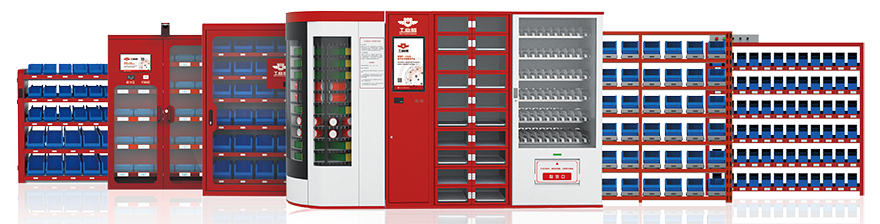
The NVMI approach combines smart inventory equipment with a SaaS material-management platform. The available solution architecture supports real-time inventory monitoring, material usage records, shortage reminders, replenishment information, and material-status visibility.
For open-access environments, the NVMI-H model can support warehouse, production-line, and transfer-location material management where convenient material collection is important. For applications requiring tighter access control and traceability, the NVMI-D enclosed smart bin provides an enclosed architecture with authorization and monitoring functions. The NVMI-X configuration supports mobile deployment where inventory needs to move with changing production workflows.
These configurations can be reviewed through the NVMI smart inventory product family. Companies evaluating broader digital warehouse processes can also reference the smart warehouse technology guides.
For NVMI and consignment applications, the most important point is not simply installing hardware. The project must determine which physical event creates a digital transaction, how that transaction changes available inventory, whether it changes ownership status, and which parties receive the data.
System Integration and Data Flow
Industrial NVMI and consignment projects may require information exchange with ERP, MES, WMS, supplier portals, or other enterprise systems. The exact integration scope should be confirmed for each project because different factories use different systems, workflows, security policies, and data definitions.
A useful architecture discussion should focus on data objects before software brands. Common objects can include material code, storage location, available quantity, user or department, issue quantity, return quantity, replenishment quantity, supplier information, timestamp, and transaction status.
Where APIs or standard protocols are supported by the confirmed project architecture, these records can be exchanged with other enterprise systems. However, a manufacturer should not assume that every ERP or warehouse system is automatically compatible. Interface availability, data mapping, authentication, exception handling, and testing should be confirmed during technical evaluation.
Which Inventory Model Fits Your Plant?
The correct model depends on the problem the plant is trying to solve. A practical selection process can begin with four questions.
Choose NVMI when replenishment responsibility is the main problem. If internal teams spend significant effort checking levels, creating repetitive replenishment requests, and communicating routine demand to suppliers, supplier-managed replenishment may be worth evaluating.
Choose consignment when ownership and settlement structure are important. If the business wants supplier-owned stock physically available at the manufacturing site with ownership transferring according to agreed consumption rules, consignment may be relevant.
Consider combining NVMI and consignment when both problems exist. This can be appropriate for recurring industrial materials where the supplier can maintain inventory while consumption records support ownership transfer and settlement.
Keep conventional purchasing where direct buyer control remains necessary. Highly customized, project-specific, engineering-sensitive, low-frequency, or highly unpredictable items may require a different procurement process. There is no requirement for every SKU in a factory to use the same inventory model.
Practical Evaluation Checklist
- Identify candidate material categories and SKUs.
- Document current monthly or periodic usage patterns.
- Map the existing replenishment workflow.
- Identify current stockout and overstock pain points.
- Define whether the supplier or buyer should monitor replenishment.
- Define who owns inventory at each stage of the process.
- Define the transaction that represents consumption.
- Confirm how returns and adjustments are recorded.
- Define minimum, maximum, or target replenishment logic.
- Identify users and required access-control levels.
- Confirm whether open or enclosed material storage is appropriate.
- Map required ERP, MES, WMS, or supplier-system data exchange.
- Define reconciliation and settlement responsibilities.
- Establish project-specific KPIs before the pilot begins.
Useful KPIs may include inventory visibility, replenishment response, emergency ordering frequency, transaction completeness, stock discrepancy events, or manual administrative workload. KPI targets should be established from the plant's actual baseline and should not be treated as guaranteed outcomes of NVMI, consignment, or smart inventory technology.
Frequently Asked Questions
Is NVMI the Same as Consignment Inventory?
No. NVMI focuses on responsibility for inventory monitoring and replenishment. Consignment focuses on ownership of inventory while it is held at the buyer's location. They can be implemented independently or combined.
Who Owns Inventory in a NVMI Program?
There is no single ownership rule for NVMI. Inventory can be buyer-owned or supplier-owned depending on the commercial arrangement. Ownership should be defined separately from replenishment responsibility.
When Does Ownership Transfer in Consignment Inventory?
Ownership typically transfers according to the consumption or ownership-transfer rules agreed by the buyer and supplier. The exact transaction should be documented contractually and configured correctly in the relevant business systems.
Does Consignment Always Mean Pay on Consumption?
Consumption-based settlement is commonly associated with consignment, but actual invoice and payment rules depend on the commercial agreement and financial process. A company should confirm these rules with procurement, finance, and the supplier.
Can Smart Bins Support NVMI and Consignment Workflows?
Smart inventory equipment can support these workflows by providing inventory updates, material issue records, shortage information, traceability, and replenishment data. However, ownership-transfer and settlement rules must still be defined by the commercial and system process.
Do NVMI and Consignment Require ERP Integration?
Not every project requires the same level of integration. Some deployments can begin with a dedicated inventory-management platform, while others need data exchange with ERP, MES, WMS, or supplier systems. The required interface and data mapping should be confirmed during project design.
References & Sources
- Bear Bit NVMI product documentation: smart inventory equipment, real-time inventory monitoring, material usage records, shortage reminders, replenishment workflows, access control, and SaaS material-management functions.
- SAP Help Portal documentation on Vendor-Managed Inventory and Supplier-Managed Inventory: supplier responsibility for replenishment based on shared inventory and demand information.
- Oracle Fusion Cloud Supply Chain documentation on Consigned Inventory: supplier ownership of consigned material before the defined consumption and ownership-transfer process.
- Commercial ownership, taxation, accounting, invoicing, and settlement requirements should be reviewed according to the buyer's jurisdiction, contract, and finance policies.
Conclusion: Separate Replenishment Responsibility from Inventory Ownership
NVMI vs consignment inventory becomes much easier to evaluate when the two questions are separated. NVMI determines how inventory information is shared and who takes responsibility for replenishment. Consignment determines who owns stock while it is stored at the buyer's location and when ownership or settlement is triggered.
Manufacturers do not have to choose only one model. NVMI can operate with conventional buyer-owned inventory, consignment can operate without supplier-managed replenishment, and both models can be combined when the commercial and operational requirements support it.
For a practical project evaluation, prepare your material categories, SKU list, current usage pattern, existing replenishment workflow, user count, access-control requirements, supplier model, deployment locations, required system integration, and target KPIs. These inputs provide the foundation for designing a digital inventory workflow that clearly connects material consumption, replenishment responsibility, ownership, and settlement.