NVMI vs Kanban is an important comparison for manufacturers trying to improve the replenishment of fasteners, C-parts, MRO consumables, and other frequently used industrial materials. Both approaches can reduce dependence on reactive ordering, but they solve the replenishment problem from different angles. Kanban creates a pull signal based on actual material consumption, while Vendor Managed Inventory gives a supplier an agreed role in monitoring inventory and planning replenishment.
For procurement managers and plant operations teams, the decision is rarely as simple as choosing one system and rejecting the other. A Kanban process can work entirely inside a factory, while NVMI extends replenishment responsibility across the buyer-supplier relationship. In many C-parts environments, the strongest design can combine the two: a point-of-use Kanban or digital consumption signal identifies demand, while a NVMI process determines how the supplier responds and replenishes the material.
NVMI vs Kanban: Understanding the Right Replenishment Model for C-Parts
Quick Answer
Kanban is fundamentally a pull-based replenishment method. A downstream consumption event creates a signal indicating that material needs to be replaced. The signal may be a physical card, an empty container, a two-bin condition, an electronic message, or another controlled trigger.
NVMI operates at a different level. In a C-parts NVMI program, the supplier receives agreed inventory or consumption information and takes responsibility for determining replenishment needs according to predefined parameters. The buyer defines the scope, service expectations, inventory policies, and exceptions, while the supplier plays a more active role in keeping material available.
For stable, repetitive point-of-use consumption, Kanban can provide a simple and highly visible trigger. When a manufacturer wants the supplier to manage replenishment across many SKUs, locations, or inventory points, NVMI can provide a broader collaborative framework. The two approaches can also work together.
Key Takeaways
- Kanban is primarily a pull signal that connects consumption with replenishment.
- NVMI primarily defines supplier responsibility for monitoring and replenishing agreed inventory.
- A two-bin system can be used as a simple physical Kanban mechanism, but Kanban is broader than two-bin storage.
- NVMI usually requires more structured data sharing between the manufacturer and supplier.
- Kanban is particularly useful when replenishment rules can be made visible and repeatable close to the point of use.
- NVMI can be useful when a supplier manages many recurring C-parts across multiple locations or storage points.
- Digital smart bins and cabinets can connect point-of-use consumption signals with supplier replenishment workflows.
- The best model depends on SKU behavior, supplier capability, storage architecture, access requirements, and the level of digital integration required.
Table of Contents
- The basic difference between NVMI and Kanban
- How Kanban replenishment works
- How NVMI works for industrial C-parts
- Where the two-bin system fits
- NVMI vs Kanban comparison
- When to combine NVMI and Kanban
- How digital inventory technology changes the workflow
- How to choose a model
- Frequently asked questions
The Basic Difference: Signal vs Responsibility
The clearest way to understand NVMI vs Kanban is to separate the replenishment signal from replenishment responsibility.
Kanban answers the question: What event tells us that more material is needed? A part is consumed, a container reaches a defined condition, or a quantity falls to an agreed point. That event authorizes or requests replenishment from an upstream process.
NVMI answers another question: Who monitors the available information and takes responsibility for planning the replenishment? Under a NVMI arrangement, that responsibility is assigned in whole or in part to the supplier according to an agreed inventory policy.
This distinction matters because a factory can use Kanban without NVMI. For example, an internal supermarket may use Kanban signals between a warehouse and an assembly line while the purchasing team still places supplier orders conventionally.
A factory can also use NVMI without traditional physical Kanban cards. Smart inventory equipment or inventory-management software can provide quantity and consumption information directly to a supplier-managed replenishment process.
How Kanban Replenishment Works for Industrial Materials
Kanban replenishment is based on actual downstream demand. Rather than replenishing material simply because a forecast says it might be required, the process generates an authorization when consumption creates a need.
Consider a production workstation using standard bolts. A defined quantity is stored near the operator. As bolts are consumed, the available quantity decreases. When the agreed replenishment condition is reached, a signal is generated to the warehouse or other upstream source. The upstream process then replaces the consumed quantity according to the Kanban rule.
This approach makes replenishment logic visible. Employees can understand what triggers a refill, where the material should go, and how much should be replenished. For repetitive C-parts, that simplicity can be valuable because the administrative effort of managing each small material can otherwise become disproportionate to its individual purchase value.
However, Kanban requires disciplined design. Container quantity, replenishment lead time, usage behavior, storage capacity, and exception handling all influence whether the system operates effectively. If consumption changes substantially but Kanban parameters remain unchanged, the physical signal can still arrive too early or too late.
Kanban should therefore be treated as a controlled replenishment method rather than simply a set of cards or bins.
How C-Parts NVMI Changes Supplier Responsibility
C-parts NVMI expands the replenishment process beyond the factory's internal material flow. The supplier receives agreed inventory, usage, or demand information and uses it to plan replenishment for the customer.
A practical NVMI workflow can include material identification, inventory monitoring, consumption records, minimum or target inventory rules, shortage signals, supplier replenishment planning, material refill, and confirmation of the replenishment transaction.
The major organizational change is that the supplier no longer waits only for individual purchase requests. Instead, the supplier participates continuously in managing the agreed inventory position.
This can be particularly relevant for C-parts because industrial facilities may manage many standard components that are consumed repeatedly. Procurement does not necessarily want to make an individual planning decision every time one storage location needs another quantity of screws, nuts, washers, clips, or maintenance consumables.
NVMI does not remove buyer control. The manufacturer still needs to define which materials are included, what inventory rules apply, which locations are covered, what data is available to the supplier, and how exceptions are handled. Commercial terms such as inventory ownership and settlement should also be defined separately.
Where the Two-Bin System Fits
A two bin system is one practical way to create a visible replenishment signal for predictable materials. Two containers hold the same SKU. Material is normally consumed from the first container. When the first bin reaches its defined empty or replenishment condition, the second bin supports continued consumption while the first is refilled.
The strength of this design is simplicity. Employees can immediately see when replenishment is required without performing a detailed inventory calculation for every withdrawal.
But two-bin should not be treated as a universal solution. Very irregular consumption, large components, restricted materials, changing production schedules, or items requiring individual-user traceability may require a different control method.
The two-bin concept also does not determine who actually performs the supplier replenishment. An internal warehouse team can respond to the bin signal, or the signal can become part of a NVMI workflow in which the supplier is responsible for maintaining agreed material availability.
NVMI vs Kanban Comparison for Industrial C-Parts
| Decision Area | Kanban | NVMI |
|---|---|---|
| Primary purpose | Create a pull-based replenishment signal | Assign supplier responsibility for inventory replenishment |
| Main trigger | Actual consumption or a defined inventory condition | Inventory, consumption, demand, or agreed min/max information |
| Typical scope | Workstation, supermarket, warehouse, or internal material flow | Buyer-supplier replenishment relationship |
| Supplier involvement | Not inherently required | Central to the operating model |
| Physical signal required | No; signals can be physical or digital | No; replenishment can be driven by shared digital data |
| Two-bin compatibility | Common practical implementation | Can use two-bin signals as an input to supplier replenishment |
| Data sharing | Can operate with relatively simple local information | Usually requires structured buyer-supplier inventory visibility |
| Best suited to | Repeatable pull replenishment close to consumption | Supplier-managed replenishment across agreed materials and locations |
| Can be combined? | Yes | Yes |
When Combining NVMI and Kanban Makes More Sense
For many manufacturers, NVMI and Kanban should not be evaluated as competing systems. They can represent different layers of the same replenishment architecture.
Imagine an assembly plant with multiple production areas using standard C-parts. At the workstation, consumption creates a Kanban-style replenishment signal. That signal instructs the internal logistics process to refill point-of-use inventory. At the warehouse or supplier-managed storage level, aggregated inventory and consumption information can then support NVMI replenishment from the external supplier.
The result is a multi-level pull process:
- An operator consumes a component at the point of use.
- The local inventory condition creates a replenishment signal.
- The line-side or workstation location is replenished from an upstream storage point.
- Inventory information at the upstream location is updated.
- The supplier monitors agreed inventory or consumption information.
- The supplier prepares replenishment when the defined NVMI condition is reached.
- Received material restores the agreed inventory position.
In this structure, Kanban controls the movement signal while NVMI defines the supplier collaboration model. This can be particularly useful when the manufacturer wants simple point-of-use behavior without forcing production operators or procurement personnel to manage every external replenishment transaction manually.
How Smart Inventory Technology Changes the Replenishment Signal
Traditional Kanban relies heavily on visible physical signals. Digital inventory systems can preserve the same pull logic while capturing material activity automatically and making it available to more participants.
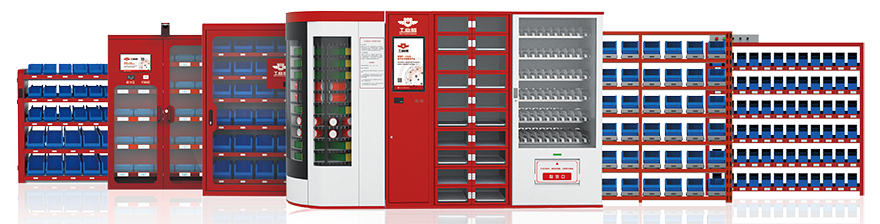
The NVMI approach combines smart inventory hardware with a SaaS material-management platform. The available system architecture supports real-time inventory tracking, material usage records, shortage reminders, replenishment information, and visual monitoring of material status.
For relatively open material-access environments, NVMI-H can support warehouse, production-line, and transit material management where convenient collection is important. When materials require tighter authorization or access traceability, NVMI-D provides an enclosed smart inventory architecture. NVMI-X supports mobile deployment where inventory needs to move with changing production requirements.
Manufacturers can review the broader smart inventory and NVMI solution family when selecting the physical architecture for a replenishment project. Related industrial smart warehouse guides can also help teams evaluate digital material-management workflows.
A digital system does not eliminate the need to define the replenishment rule. The project still needs to answer several questions: What quantity change constitutes consumption? Which threshold generates a shortage signal? Who receives the signal? Does it trigger an internal refill or supplier replenishment? How are returns handled? Which system is the authoritative inventory record?
Where supported by the confirmed project scope, data exchange with ERP, MES, WMS, or supplier systems can connect physical material activity with broader procurement and inventory workflows through APIs or standard protocols. Actual interfaces, data objects, authentication, and integration behavior should be technically confirmed for each deployment.
Which Model Fits Different C-Parts Scenarios?
Use Kanban as the primary method when the replenishment loop is local and highly repeatable. If a workstation repeatedly consumes the same materials and an internal warehouse can respond quickly, a visual or digital Kanban signal may be enough to control the flow.
Consider a two-bin workflow when a simple physical trigger is valuable. Two-bin replenishment can be practical for standardized materials with repeatable consumption where operators need an intuitive signal and the second container can cover the refill period.
Use NVMI when supplier involvement is the main requirement. If the buyer wants the supplier to monitor agreed stock positions and take responsibility for external replenishment across multiple C-parts, NVMI provides the broader operating framework.
Combine NVMI and Kanban when both internal pull flow and supplier collaboration matter. Kanban can control the point-of-use signal while NVMI manages supplier replenishment at the upstream level.
Consider controlled smart cabinets when access and traceability matter. Some C-parts, tools, maintenance materials, or sensitive components may require user authentication and digital issue records rather than unrestricted open-bin access.
Practical Selection Checklist for Procurement and Operations
- Material profile: Are the SKUs standardized and repeatedly consumed?
- Usage variability: Is demand relatively stable, or does it change sharply with projects or production schedules?
- SKU count: How many C-parts must be managed across the target area?
- Point-of-use locations: Are materials concentrated in one storeroom or distributed across many workstations?
- Current trigger: How does the plant know today that a refill is required?
- Supplier role: Should the supplier actively monitor inventory and initiate replenishment?
- Internal logistics: Who replenishes the production line from the warehouse or supermarket?
- Access control: Can materials remain openly accessible, or is authorization required?
- Traceability: Does the plant need to know who collected a material and when?
- Data requirements: Is simple visual control sufficient, or does management need digital usage history and inventory visibility?
- Integration scope: Does replenishment data need to exchange information with ERP, MES, WMS, or supplier systems?
- Exception handling: What happens when usage suddenly increases or the normal replenishment route fails?
- KPI framework: Which indicators will be used to evaluate the pilot, such as shortage events, emergency requests, replenishment response, transaction completeness, or manual workload?
The selection should start with the actual material flow rather than with a preferred technology. Mapping current consumption, replenishment, supplier communication, and exception processes usually reveals where a Kanban signal, NVMI responsibility, or a combination of both can add the most operational value.
Frequently Asked Questions
Is NVMI the Same as Kanban?
No. Kanban is primarily a pull-based signaling method for replenishment. NVMI is a supplier-management model in which the supplier takes responsibility for replenishing agreed inventory based on shared information and established rules.
Can a Two-Bin System Be Used With NVMI?
Yes. A two-bin condition can provide the consumption or replenishment signal, while the supplier manages the external refill process under a NVMI agreement. The specific workflow should define who receives the signal and who performs each replenishment step.
Which Model Is Better for Fasteners and C-Parts?
There is no universal answer. Kanban can work well for repetitive point-of-use replenishment, while NVMI can be useful when suppliers are expected to manage inventory across many recurring materials. A combined approach is also practical in many industrial environments.
Does Digital Kanban Still Count as Kanban?
A replenishment signal does not have to be a physical card. Digital systems can communicate actual consumption or an agreed inventory condition to an upstream process while preserving the basic pull principle.
Does NVMI Require a Smart Cabinet?
No. NVMI is an inventory-management model rather than a specific hardware format. Smart cabinets and smart bins can strengthen the process by providing inventory visibility, digital material records, shortage signals, access control, and replenishment data where those capabilities are required.
Can NVMI and Kanban Data Integrate With Enterprise Systems?
Digital replenishment projects can exchange relevant information with other enterprise systems when supported by the project architecture. The actual ERP, MES, WMS, or supplier-system interface, data mapping, protocol, and workflow should be confirmed before implementation.
References & Sources
- Bear Bit NVMI product documentation: real-time inventory tracking, material usage records, shortage reminders, replenishment workflows, smart inventory equipment, access control, and SaaS material-management capabilities.
- Lean Enterprise Institute, Pull Production: pull-system principles in which downstream consumption communicates replenishment requirements to upstream processes.
- SAP Help Portal, Vendor-Managed Inventory: supplier replenishment planning based on customer inventory, demand, and agreed replenishment information.
- Actual C-parts replenishment parameters, system interfaces, access policies, supplier responsibilities, and KPI targets should be confirmed for each manufacturing project.
Conclusion: NVMI and Kanban Can Solve Different Parts of the Same Problem
NVMI vs Kanban should not be treated as a choice between two competing technologies. Kanban defines how actual consumption can generate a pull signal. NVMI defines how a supplier can use agreed inventory information to take responsibility for replenishment. A two-bin system can provide a simple Kanban signal, while smart bins and digital inventory systems can create a more connected version of the same replenishment logic.
For industrial C-parts, the most practical architecture may use different methods at different levels. Kanban can control line-side or point-of-use replenishment, while NVMI manages the supplier relationship and upstream refill process. Digital inventory technology can connect those layers by turning physical material activity into inventory and replenishment information.
To evaluate the right model for your plant, prepare your material categories, SKU count, monthly usage pattern, current stockout pain points, existing replenishment workflow, supplier model, target deployment areas, user count, access-control requirements, integration scope, and target KPIs. These inputs make it possible to design an industrial inventory control process around actual material flow rather than forcing every C-part into the same replenishment method.