Weight-based vs unit-based inventory control is a choice about how to establish quantity. A factory can report both methods in pieces: one estimates the count from measured weight, while the other records pieces or known packs as they are counted, scanned or issued. The practical question is whether the method gives the team reliable enough information for the next decision, whether that means refilling a bin of washers or confirming the issue of a specific replacement part.
Weight-Based vs Unit-Based Inventory: How to Choose for Small Parts
Quick Answer
Use weight sensing for frequently picked, uniform components when trials show that normal withdrawals and refills can be measured reliably. Use a verified piece count, a known pack quantity or an individual transaction when the items are too light to distinguish reliably, the pack size varies, or the issue quantity must be confirmed. Many sites can use both methods: weight sensing for suitable bulk bins and unit-based transactions for selected controlled items.
Key Takeaways
- A count displayed in pieces may still be an estimate derived from weight.
- Validate the smallest normal pick as well as the stock balance near the replenishment threshold.
- A barcode can identify a SKU or pack. Confirm separately what quantity the transaction records.
- Keep access control and measurement separate when specifying a cabinet.
Contents
- How the two methods establish quantity
- Where each method fits
- What to test before choosing weight sensing
- How to handle pieces, packs and cases
- How to specify a smart cabinet
- How to run a pilot
- Frequently asked questions
How the Two Methods Establish Quantity
Weight-based inventory uses the weight of the contents, or the difference between readings before and after a movement, to estimate quantity. To estimate the stock in a bin, subtract the container weight, known as the tare, and divide the net weight by the representative average weight of one part. For a withdrawal, the weight difference can be used when the container and any other load on the sensing unit remain unchanged.
For a simple illustration, suppose a hand-counted reference sample of 40 parts has a net weight of 100 g. The average piece weight is 2.5 g. If the measured load then falls by 37.5 g and nothing else changes, the estimated withdrawal is 15 pieces. This example shows the calculation. On the shop floor, test the estimate against known quantities before using it to update stock.
Unit-based inventory records quantities through a piece count, a confirmed transaction or a known packaging quantity. An operator may count six parts and enter six, scan separately identified items, or issue a sealed pack recorded as a fixed number of pieces. A scan that identifies a SKU can still require the operator to confirm quantity. If someone scans an opened pack as though it were full, the transaction can be recorded correctly by the software while overstating the physical quantity moved.
Weight-Based vs Unit-Based Inventory: Where Each Method Fits
Start with how people take material. Operators may pick fasteners by the handful, but collect a particular replacement component one at a time against a maintenance order. A reliable refill signal may be enough for the fastener bin. For the replacement component, confirming the quantity and linking the issue to the correct order may matter more.
| Shop Floor Scenario | Method to Evaluate | What to Verify |
|---|---|---|
| Uniform fasteners routinely withdrawn in groups from a dedicated bin | Weight sensing with a reference piece weight | Typical picks and low-stock levels agree closely enough with independent counts for refill decisions. |
| Light washers or clips often taken one at a time | Verified piece count or issue by a known pack if single picks cannot be distinguished reliably | The method captures the actual issue unit without adding excessive work for operators. |
| Components issued only in sealed packs | Unit transaction at pack level | The pack identifier and conversion match the actual contents; opened packs follow a separate rule. |
| Higher-value or restricted replacement parts | Confirmed unit transaction with managed access where required | Records capture the needed quantity, user and work reference through the configured process. |
Evaluate each stock location separately. The same fastener may be received by the case in a central warehouse, transferred by the sealed pack and picked loose from a line-side bin. The methods can differ at each point as long as the inventory records use a consistent conversion and each transfer is recorded once.
What to Test Before Choosing Weight Sensing
Set a representative reference weight. Hand-count a sample from the actual stock and weigh it with the container weight accounted for. Where the same SKU comes from multiple lots or approved suppliers, check whether the reference still produces acceptable results. Differences in geometry, material or finish can affect average piece weight. A small difference can add up when the system estimates the quantity in a full bin.
Test the smallest normal withdrawal. If operators usually take one piece, a test involving a full handful cannot show whether the process will capture daily use. Repeat the normal pick at different fill levels and with the bin installed as it will be used. Compare the result with a known count. A display increment, a published sensing accuracy and the error in an estimated piece count describe different things. A gram specification alone does not establish a universal minimum piece weight.
Keep the load and location consistent. A tray, divider, bag or label holder added to the weighing platform can change the reading. A different SKU placed in the bin can also change the weight without revealing which item was added. Assign one loose SKU to each measured location, define which containers remain in place and test what happens when workers change or remove them.
Check the decision the reading supports. A bin may give a useful replenishment signal even when individual piece movements are difficult to distinguish. If the requirement is to record each single-piece withdrawal, validate that separately. For an alert, test both sides of the threshold against a physical count and agree on who acts when the signal appears.
Keep Pieces, Packs and Cases Consistent
Define the inventory unit of measure before connecting the cabinet to the rest of the stock process. Purchasing may order cases, the storeroom may transfer packs and production may consume pieces. Decide which unit each transaction uses, what conversion applies and who updates it when a supplier changes the packaging. A reliable reading or scan can still produce a wrong balance if a pack is recorded as a piece or a piece as a pack.
For example, if a storeroom sends a sealed pack to a line-side cabinet, record the transfer using the verified pack quantity. When the pack is opened for loose picking, the site needs a clear rule for adding its contents to the bin and closing or updating the pack record. Avoid keeping both the intact pack and its loose contents available in the records. Define how workers handle partial returns, damaged packaging and discrepancies at receiving.
Use the same definitions when reviewing vendor-managed inventory. A supplier needs to know whether an alert represents estimated pieces in a bin, remaining packs or a refill request. Agree on the refill unit, who confirms delivery quantities and how differences are reconciled before using cabinet data to support purchasing decisions.
Specify Measurement and Access Separately
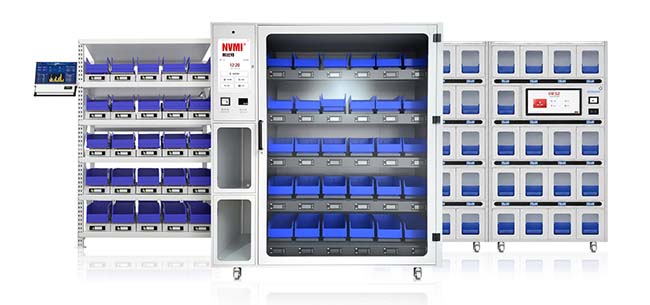
The NVMI-H open smart cabinet provides direct access to assigned bins and uses weight-sensing modules to detect stock changes. It is an option to evaluate for regularly used fasteners and industrial consumables where open picking suits the workflow. Match the bin configuration to the actual load, smallest normal withdrawal and replenishment needs.
The NVMI-D enclosed smart cabinet combines configured user verification and permissions with weight sensing. This can support a managed fastener dispensing workflow where access to stock must be controlled. Authentication identifies the user under the configured process; it does not turn a weight estimate into a directly counted issue. If the site requires a confirmed unit transaction, define the count or scan step and verify how it will be recorded.
Decide which records the cabinet should supply and which the warehouse or production system should own. For example, a cabinet may supply a stock movement or low-stock signal while another system holds the purchasing unit and approves orders. Confirm the fields and event rules for any ERP, MES or WMS exchange. The smart warehouse guides provide related reading for teams planning the wider material flow.
Run a Pilot That Compares the Records with Physical Stock
Choose representative SKUs rather than testing only the easiest items. Include a frequently picked fastener, a part near the lower end of normal pick weight and a SKU with packaging or lot variation if those conditions occur at the site. Record how each item is currently issued and where the existing balance tends to diverge from physical stock.
- Establish a baseline: Verify the starting count, container setup, reference sample and units used in each record.
- Repeat typical picks: Test single pieces where applicable, normal groups and refills at different stock levels.
- Run realistic exceptions: Include a partial pack, a return, a replaced container and material placed in the wrong location.
- Reconcile independently: Compare displayed quantities and recorded transactions with a separate physical count.
- Assign a decision to each SKU: Keep weight-based counting where it meets the agreed requirement, use it only for replenishment where appropriate, or change to a unit-based workflow.
Agree on the acceptance criteria before the test. For replenishment, check whether the alert arrives with enough stock left to cover the refill interval. For exact issue control, check whether each required movement records the correct quantity. Track missed or false alerts, unresolved discrepancies and time spent on corrections. These results show where the method fits the operation and where a different process is needed.
Frequently Asked Questions
Can a weight-sensing bin report inventory in pieces?
Yes. It can estimate pieces from the measured weight and a reference average piece weight. Verify the result with the actual material, normal pick quantities and installed bin configuration.
Is scanning a barcode the same as counting the parts?
A barcode can identify the item or package. The recorded quantity comes from the way the transaction is configured and what the operator confirms. Scanning an opened pack does not establish how many pieces remain inside.
Can similar fasteners share one measured bin?
Use separate measured locations when the SKUs require separate balances. A single weight reading cannot reliably identify which variant was taken or returned from a mixed bin.
Do we still need physical counts after installing smart bins?
Yes. Use independent checks to validate balances, investigate discrepancies and confirm that the reference weight is still suitable after a material or packaging change. Set the check frequency according to the SKU and the consequences of a wrong balance.
Can one site use weight-based and unit-based inventory together?
Yes. A practical split is to use weight sensing for suitable bulk bins and verified unit transactions for selected items. Define a common inventory unit, clear transfer rules and a process for reconciling the two records.
References & Sources
The NIST Weighing and Scales FAQs explain tare, net weight and displayed scale divisions. NVMI-H and NVMI-D product pages describe the respective access and sensing configurations. The calculation and pilot examples in this guide illustrate method selection and do not represent cabinet performance results.
Choose a Method Based on How Your Parts Move
When evaluating weight-based vs unit-based inventory, start with the SKUs that create the most frequent picks, shortages or corrections. Share their dimensions, sample weights, packaging, current storage and issue quantities with NVMI. Include stockout frequency, mixed-bin or shrinkage problems, who refills line-side stock, proposed cabinet locations and any access or system requirements. That information helps define a pilot around the decisions your team needs to make.